A small basement studio apartment can feel a little cave-like at first, but it’s honestly one of my favorite spaces to style because the transformation is so dramatic.
Fake a Skylight With a Light Panel
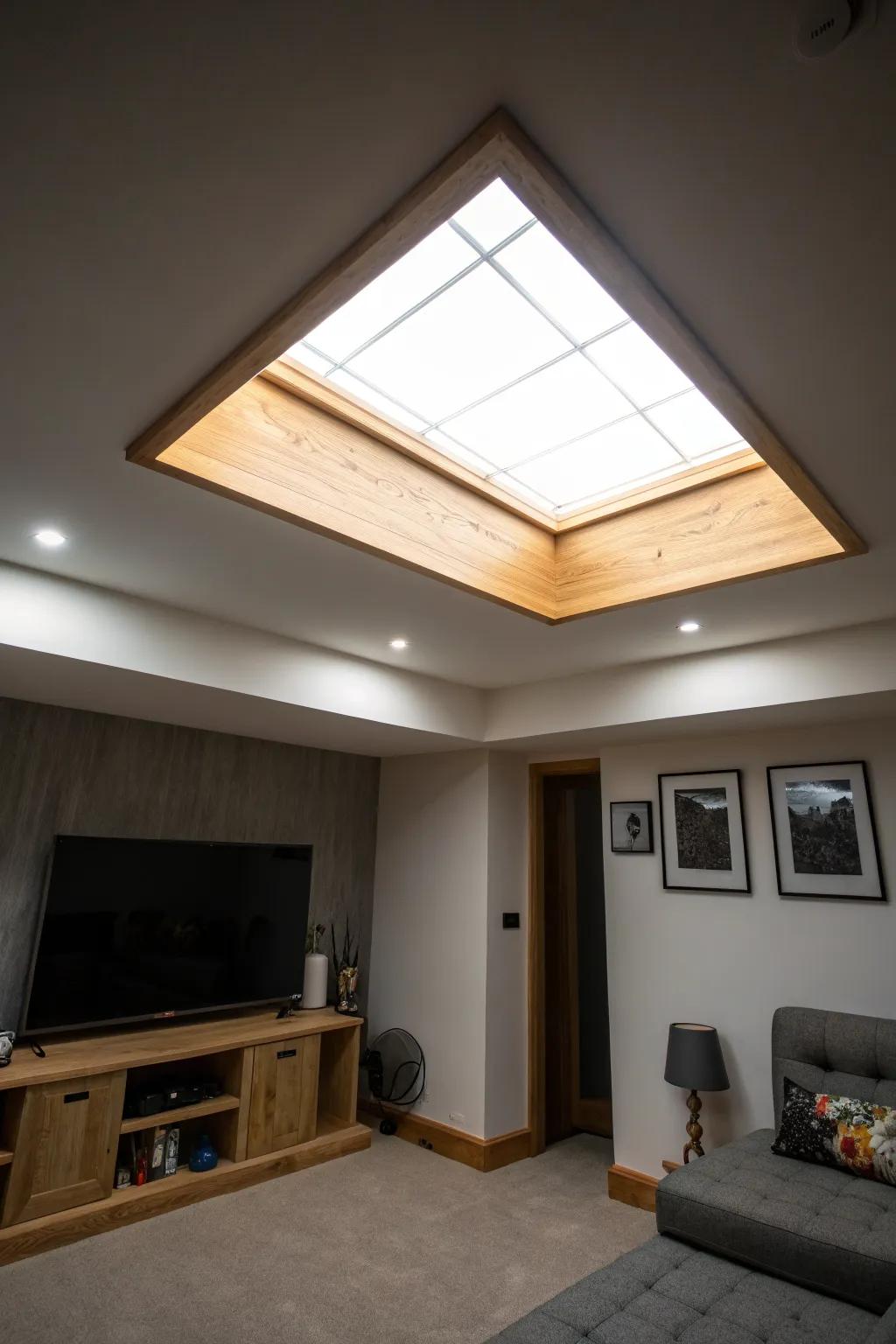
For a real wow moment in a dark basement studio apartment, I’ve mounted a plug-in daylight-style light panel on the ceiling in a simple frame so it reads like a modern skylight. The first time I tried it, the room instantly felt less subterranean—like you could finally exhale down there.
Check these products out:
- LED Flat Panel Light 2×4: Install a large, ultra-thin LED panel to mimic the flush, bright appearance of a real window.
- Wooden Trim Ceiling Molding: Frame your light panel with natural wood trim to create the realistic depth and finish seen here.
- Stick-On Window Grid Tape: Apply white window grid tape directly to the light panel to easily simulate divided window panes.
Zone the Space With Area Rugs
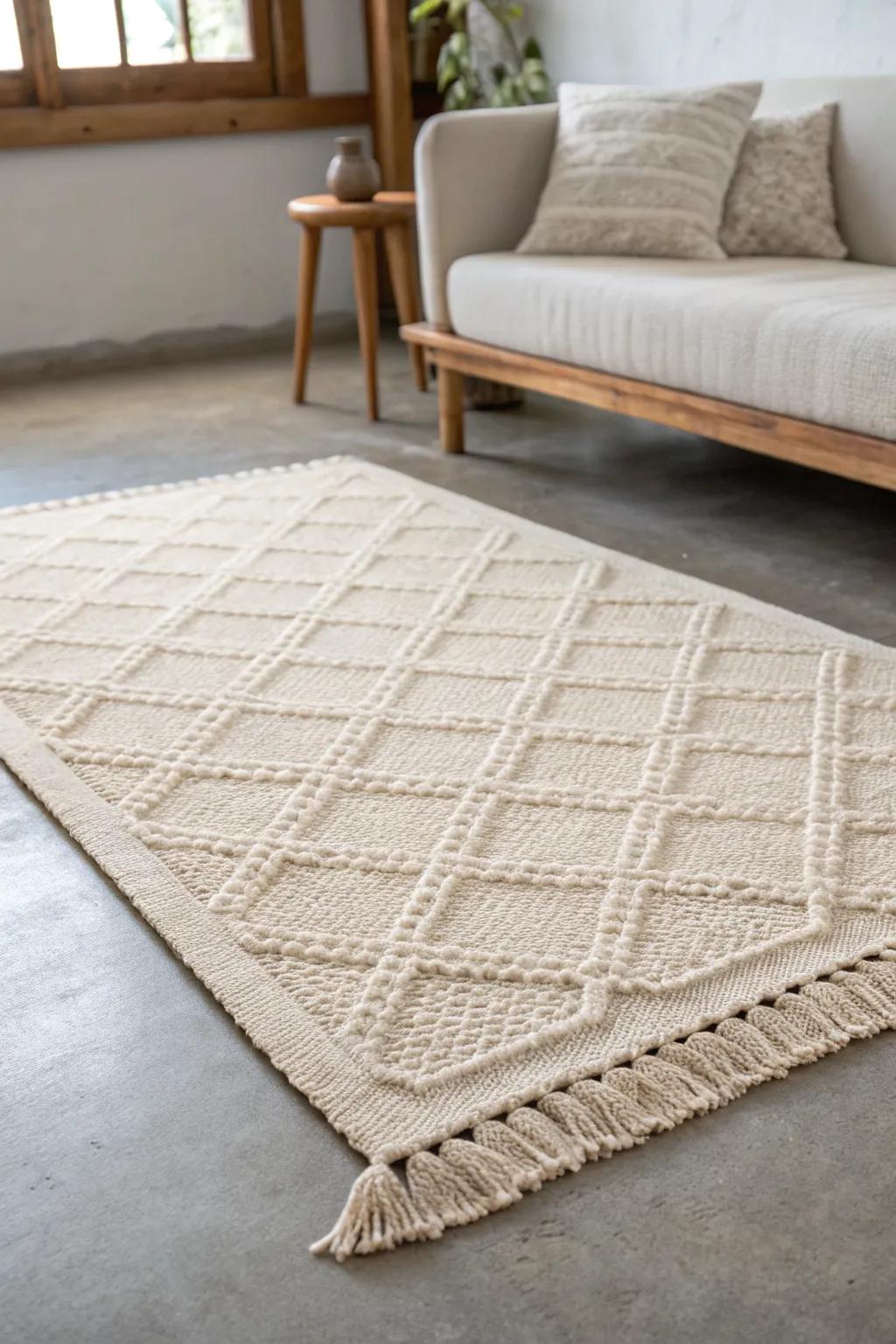
In my last small basement studio, I used one area rug for the living zone and a second smaller one for the bed zone, and it instantly made the room feel “planned.” If your basement is dark, I’ve found lighter rugs help define zones while also lifting the whole vibe.
You might like:
- Cream Geometric Area Rug: Brighten your basement studio while defining your living area with this textured, light-colored geometric rug.
- Wooden Sofa Side Table: Maximize small spaces by adding a compact wooden side table near your rug for functional elegance.
- Textured Throw Pillow Set: Complete your cozy living zone aesthetic by coordinating neutral, textured throw pillows with your new rug.
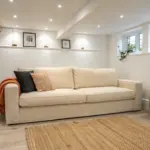
Put the Bed Behind the Sofa
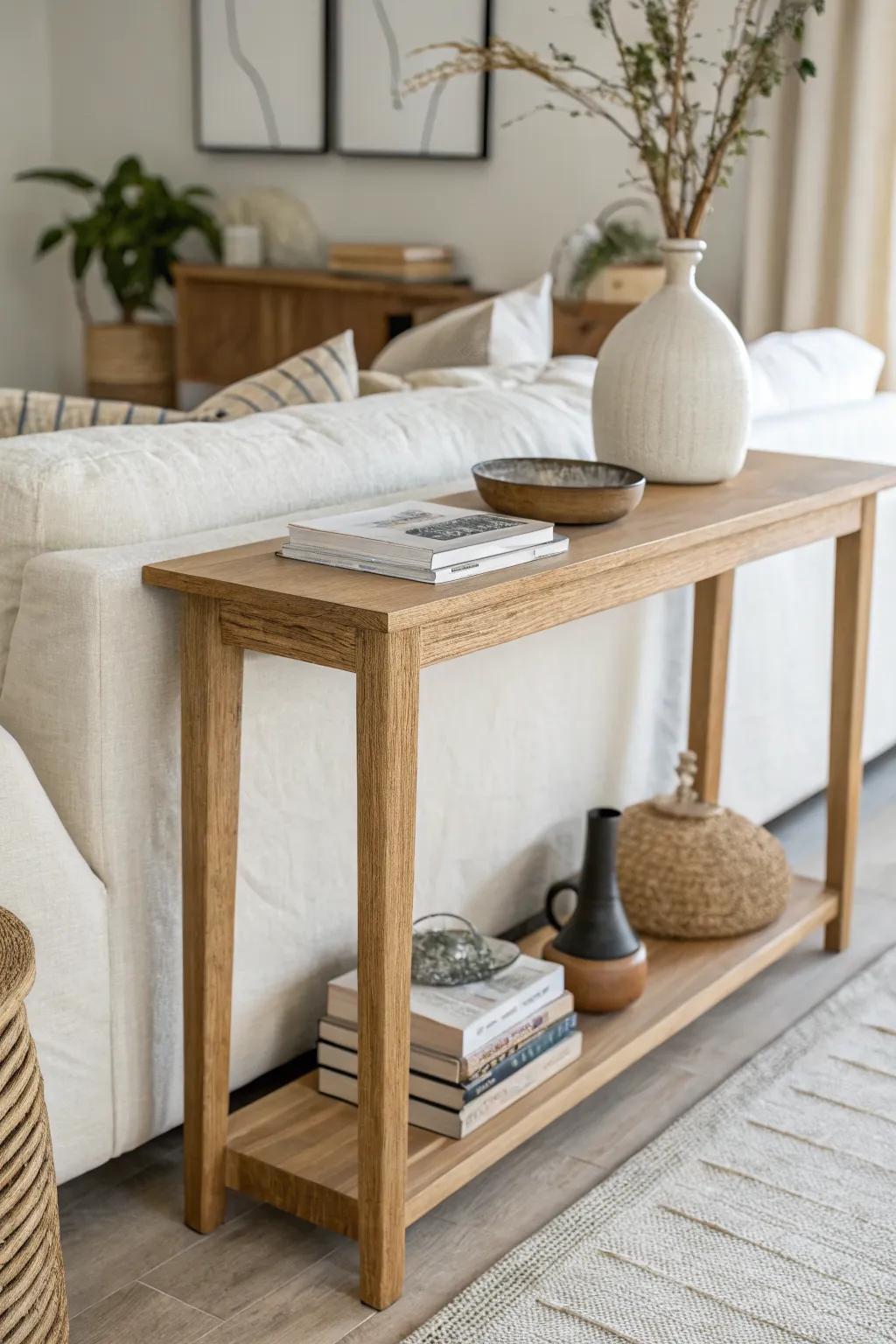
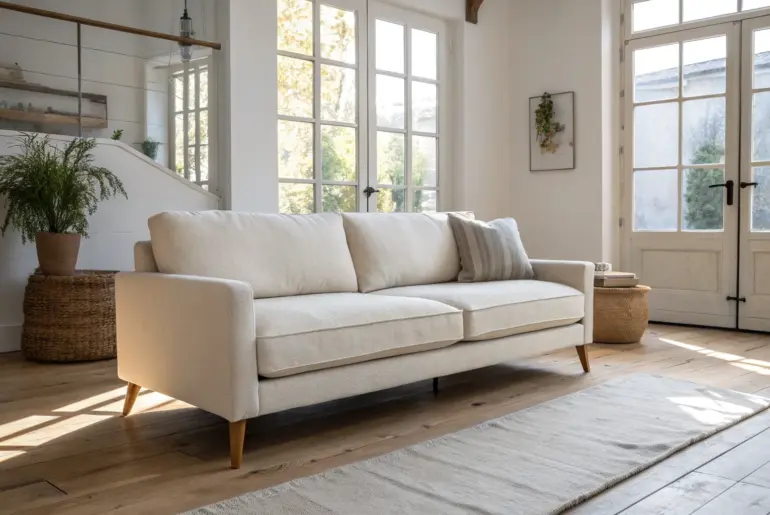
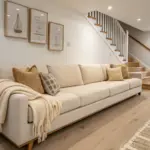
I’ve done the classic behind-the-sofa bed layout in a basement studio, and it’s the easiest way to separate “sleep” from “hangout” without blocking the room. I keep the sofa low and add a slim console or shelf behind it so the bed area still feels intentional.
Possibly helpful picks:
- Slim Console Table: Define your living zones clearly by placing a narrow, minimalist table directly behind your low-profile sofa.
- Decorative Ceramic Vase: Add height and texture to your console display with a neutral ceramic vase perfect for dried botanicals.
- Seagrass Woven Basket: Store extra throw blankets or pillows stylishly on the lower shelf to keep your small space organized.
Use a Counter as the Dining Table
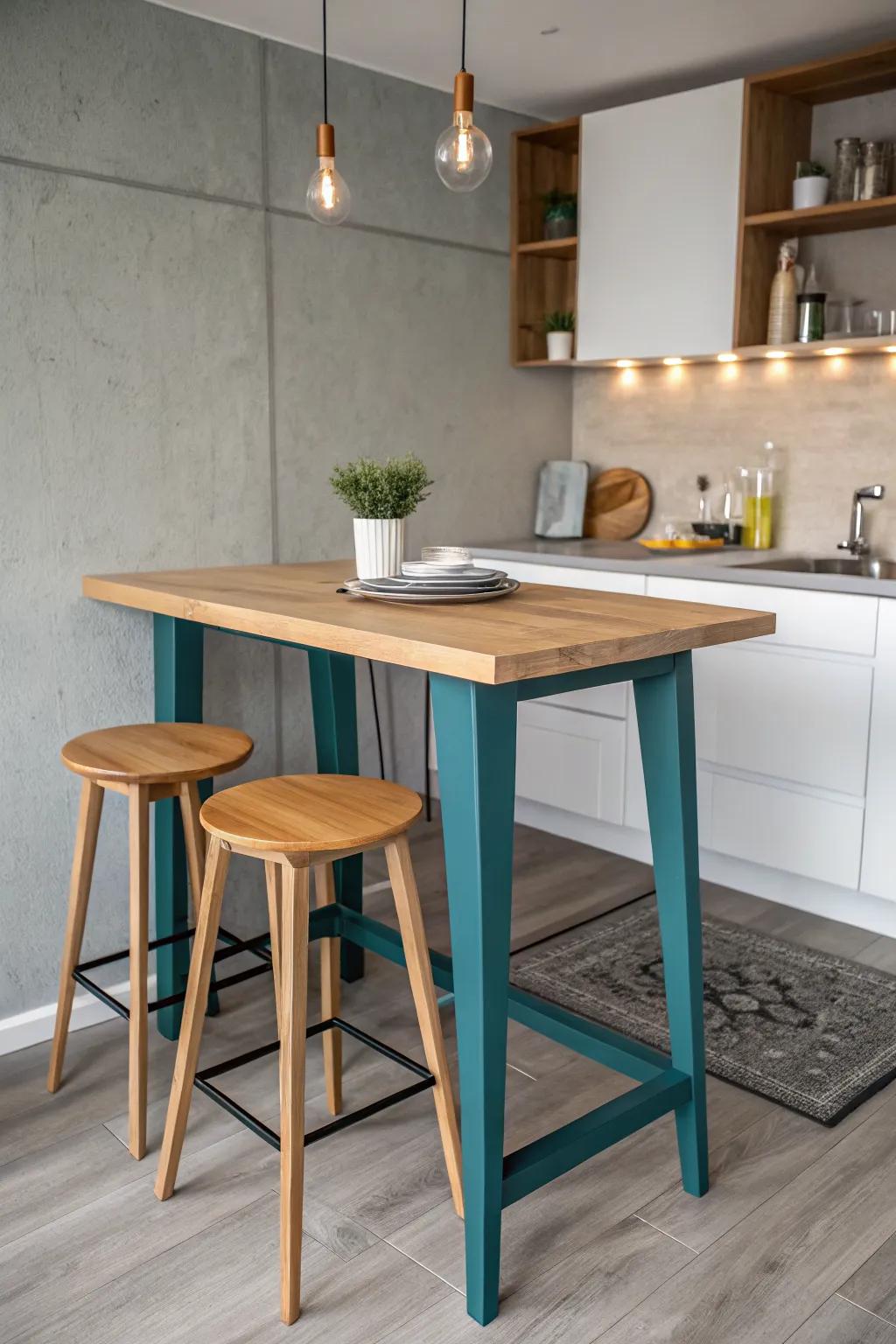
When I helped style a basement studio apartment, switching to a simple counter setup with bar stools freed up floor space immediately. I also love that it doubles as prep space, a laptop spot, and a “drop zone” when you walk in.
Useful items to consider:
- Industrial Style Bar Table (High Top): Create a compact dining zone with a narrow high-top table that doubles as extra kitchen prep space.
- Set of Wooden Bar Stools: Choose simple backless wooden stools that easily tuck underneath the counter to keep your walkways clear.
- Hanging Pendant Light Fixtures: Define your dining area and add warmth by installing simple industrial pendant lights directly above the table.
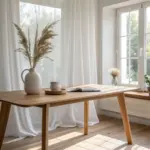
Pick a Wall-Hugging Drop-Leaf Table
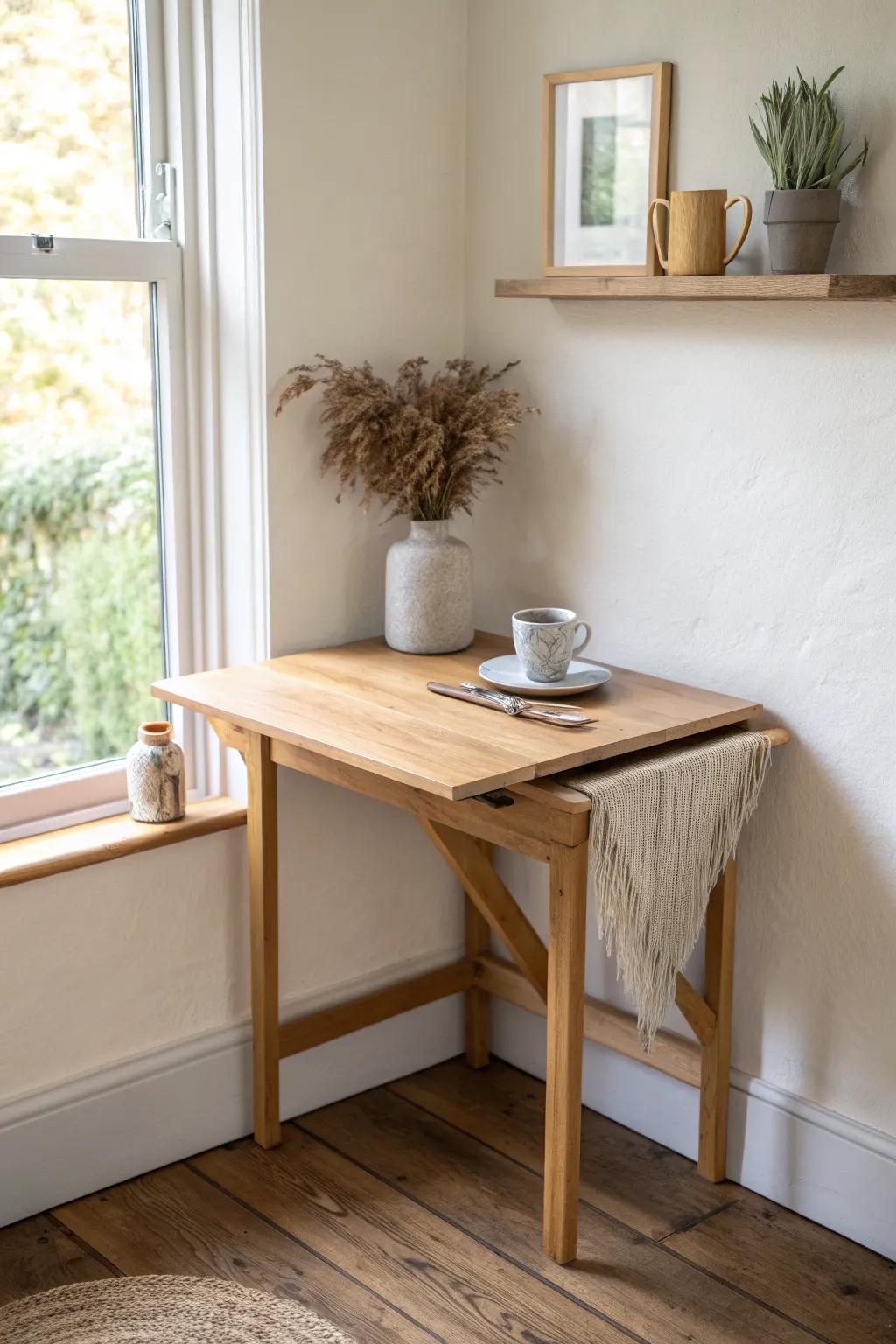
In my own tiny basement setup, a drop-leaf table against the wall gave me a real dining moment without permanently stealing walking space. I keep two lightweight chairs and pull them out only when I’m actually eating or working.
You might give these a try:
- Small Wooden Drop-Leaf Table: Maximize your limited floor space with a versatile table that folds down when not in use.
- Dried Pampas Grass Bouquet: Add a touch of natural texture and warmth to your corner setup with this low-maintenance decor.
- Ceramic Stone Vase: Complete your minimalist dining nook with a sturdy, neutral vase perfect for holding dried botanicals.
Layer Lighting Like a Pro
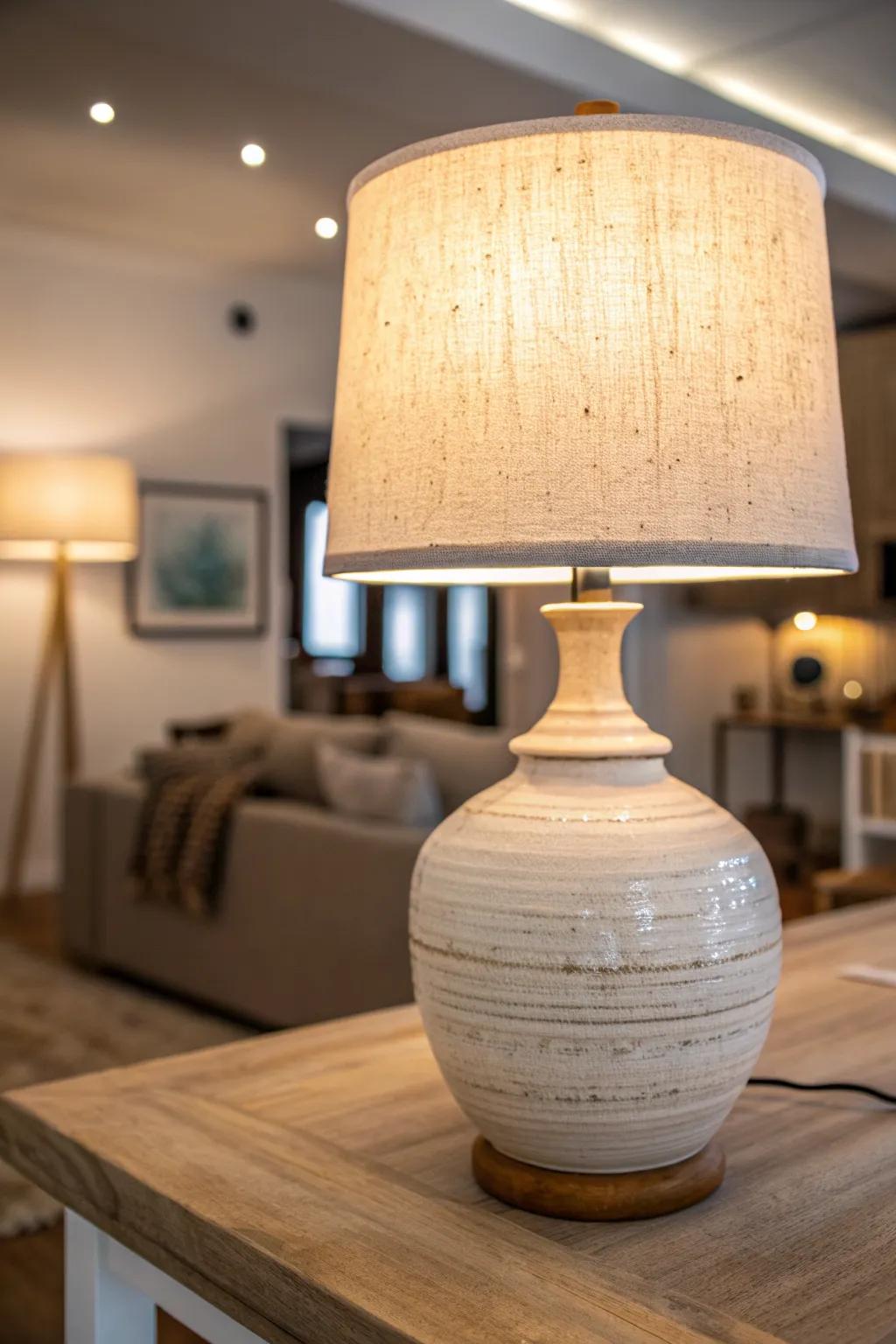
In basements, I always plan lighting in layers—recessed lighting (or a flush ceiling light), plus a floor lamp, plus a warm table lamp—because one overhead light never cuts it. I’ve watched a gloomy basement studio go cozy in one evening just by adding two extra light sources.
These products might be useful:
- Ceramic Table Lamp: Add instant warmth and texture to your nightstand or side table with a cozy ceramic lamp.
- Modern Tripod Floor Lamp: Brighten dark corners and add visual height to your space with a sleek, wooden tripod floor lamp.
- Flush Mount Ceiling Light: Replace outdated fixtures with a low-profile flush mount to illuminate the entire room without sacrificing headroom.

Bounce Light With a Big Mirror
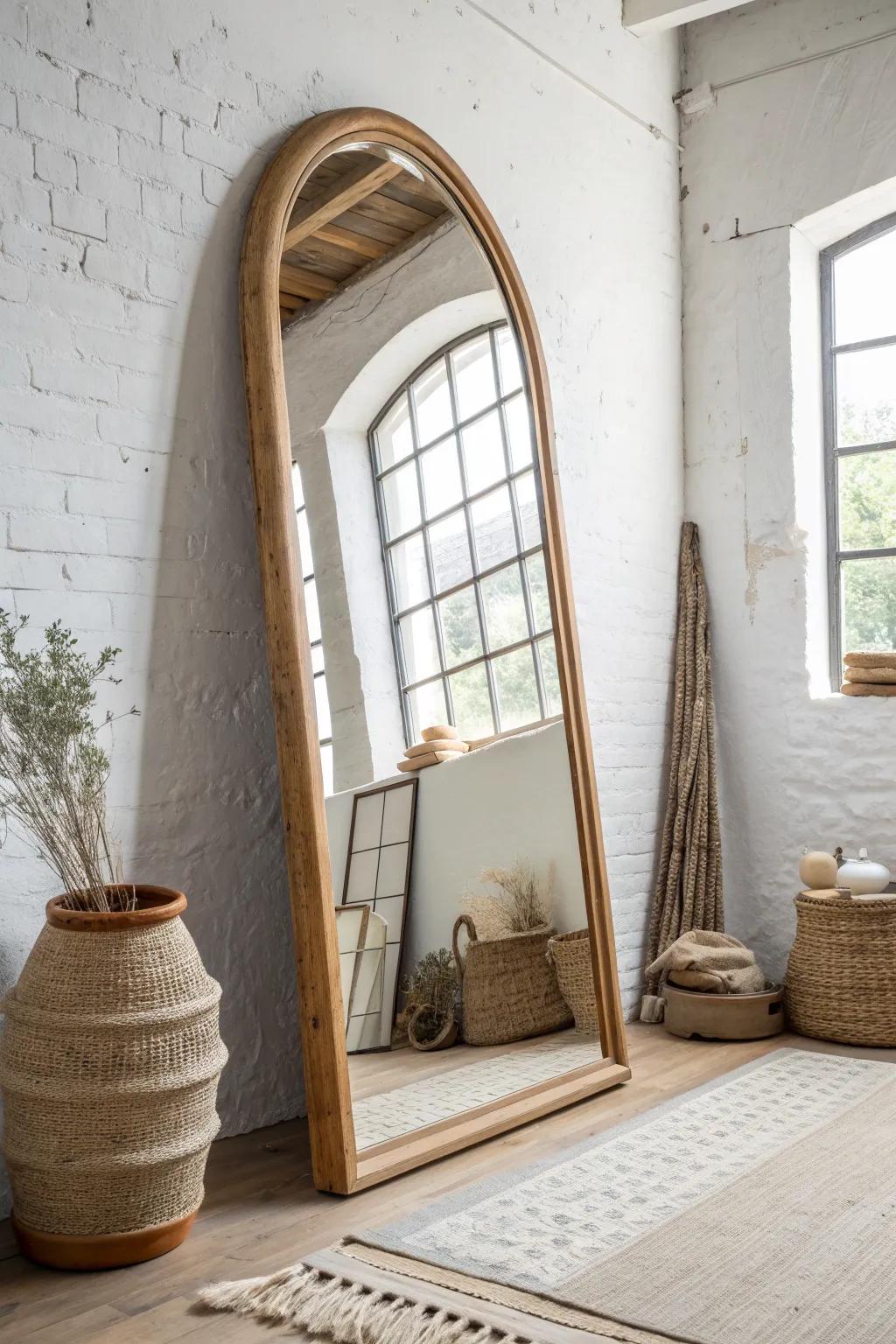
I swear by one oversized mirror in a basement apartment, especially opposite the brightest light source you’ve got. I’ve used this trick to make short basement windows feel twice as powerful, like they’re doing more work than they actually are.
A few relevant products:
- Full Length Wooden Arch Mirror: Reflect natural light and create the illusion of space with this classic, rustic wooden arch mirror.
- Woven Seagrass Floor Vase: Add texture to your mirror corner with a large woven vase, perfect for holding tall dried botanicals.
- Dried Pampas Grass Stems: Soften your basement’s aesthetic by styling your floor vase with fluffy, natural dried pampas grass stems.
Build Vertical Storage to the Ceiling
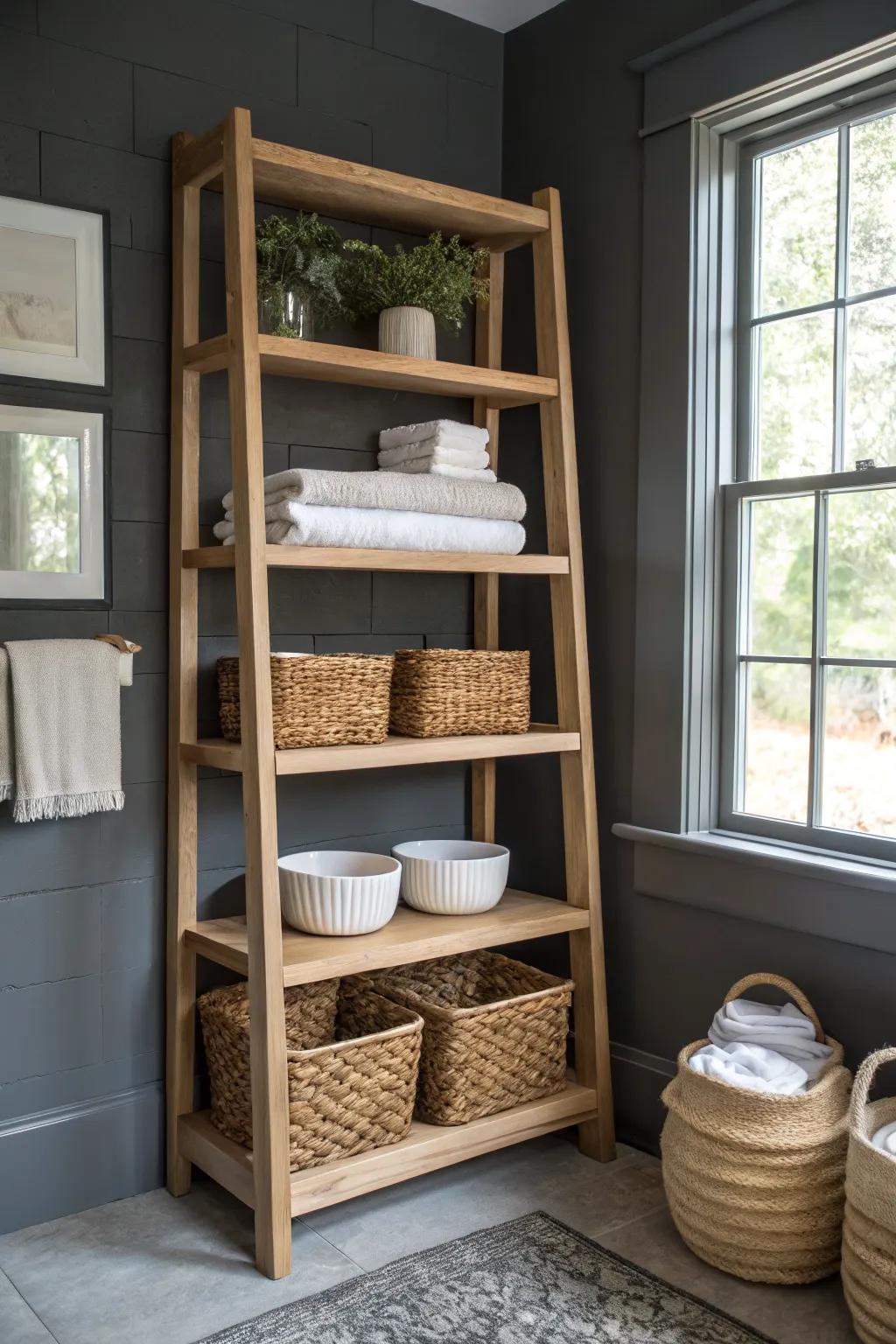
When I’m organizing a small basement studio apartment, I go vertical with tall shelving so the floor stays open and the room feels less cramped. I’ve also learned to keep the lowest shelves for daily stuff and the highest shelves for “rarely used” bins so it stays practical.
Try these:
- Leaning Ladder Shelf: Maximize vertical space without bulky furniture using this sleek shelving unit perfect for tight corners.
- Woven Storage Baskets: Hide clutter and organize daily essentials stylishly on lower shelves with these textured, natural woven baskets.
- Decorative Ceramic Bowls: Keep small items contained and accessible while adding a touch of modern decor to open shelving.
Turn the Basement Window Into a Feature
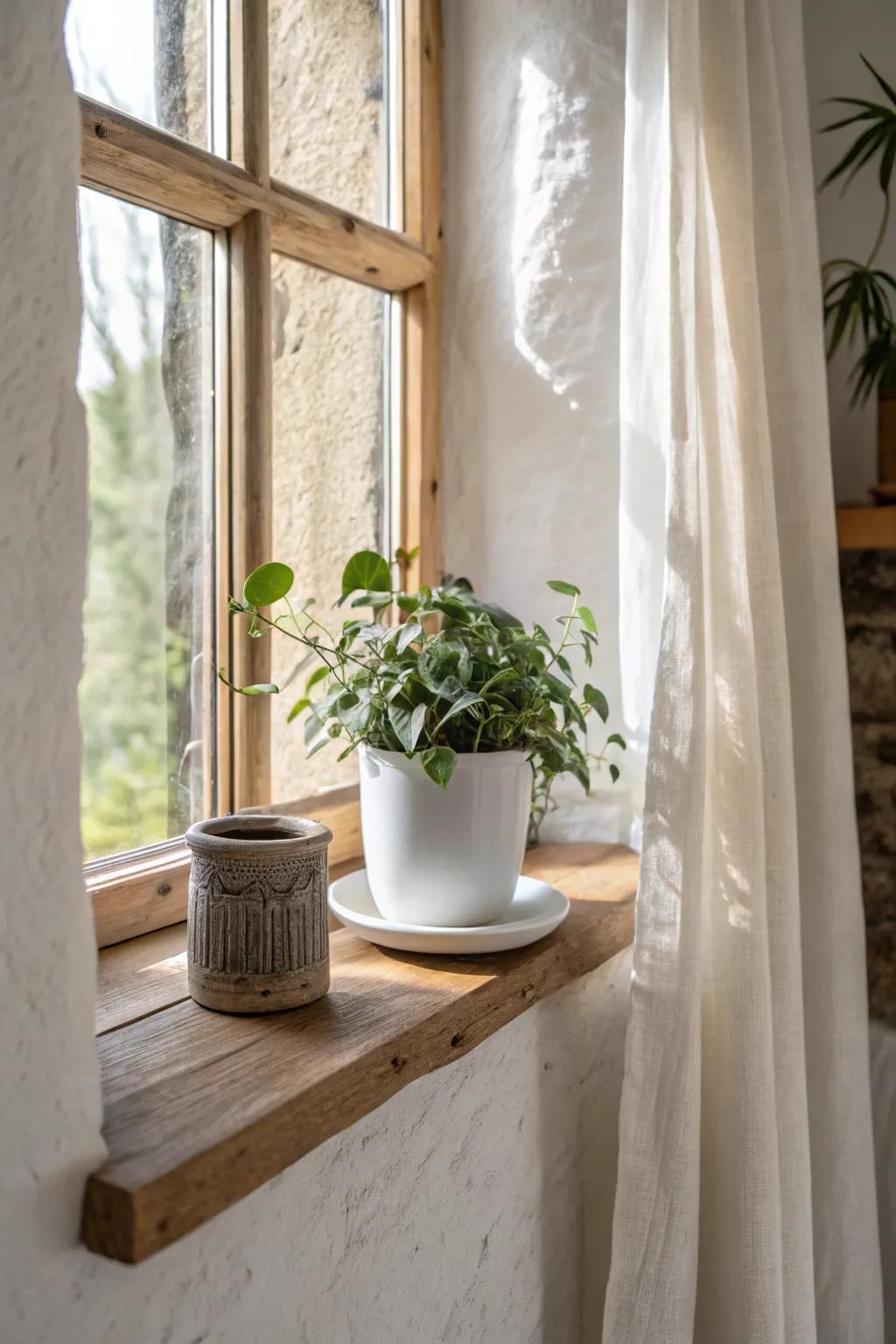
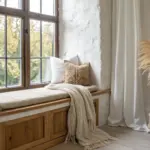
Those high little basement windows can feel awkward, but I’ve made them shine by placing the desk or bed right under them as a window nook. In my own space, I used a light curtain and a slim plant shelf, and suddenly the window looked charming instead of stingy.
A few helpful options:
- Sheer White Linen Curtains: Instantly soften harsh light and add texture without blocking the sun by hanging lightweight, airy fabric panels.
- Minimalist White Ceramic Plant Pot: Create a clean focal point for your window sill greenery with a simple, modern white planter pot.
- Rustic Wooden Floating Shelf: Extend your narrow window ledge into a functional display space by installing a sturdy, natural wood shelf.
Hide Utility Panels With Decor
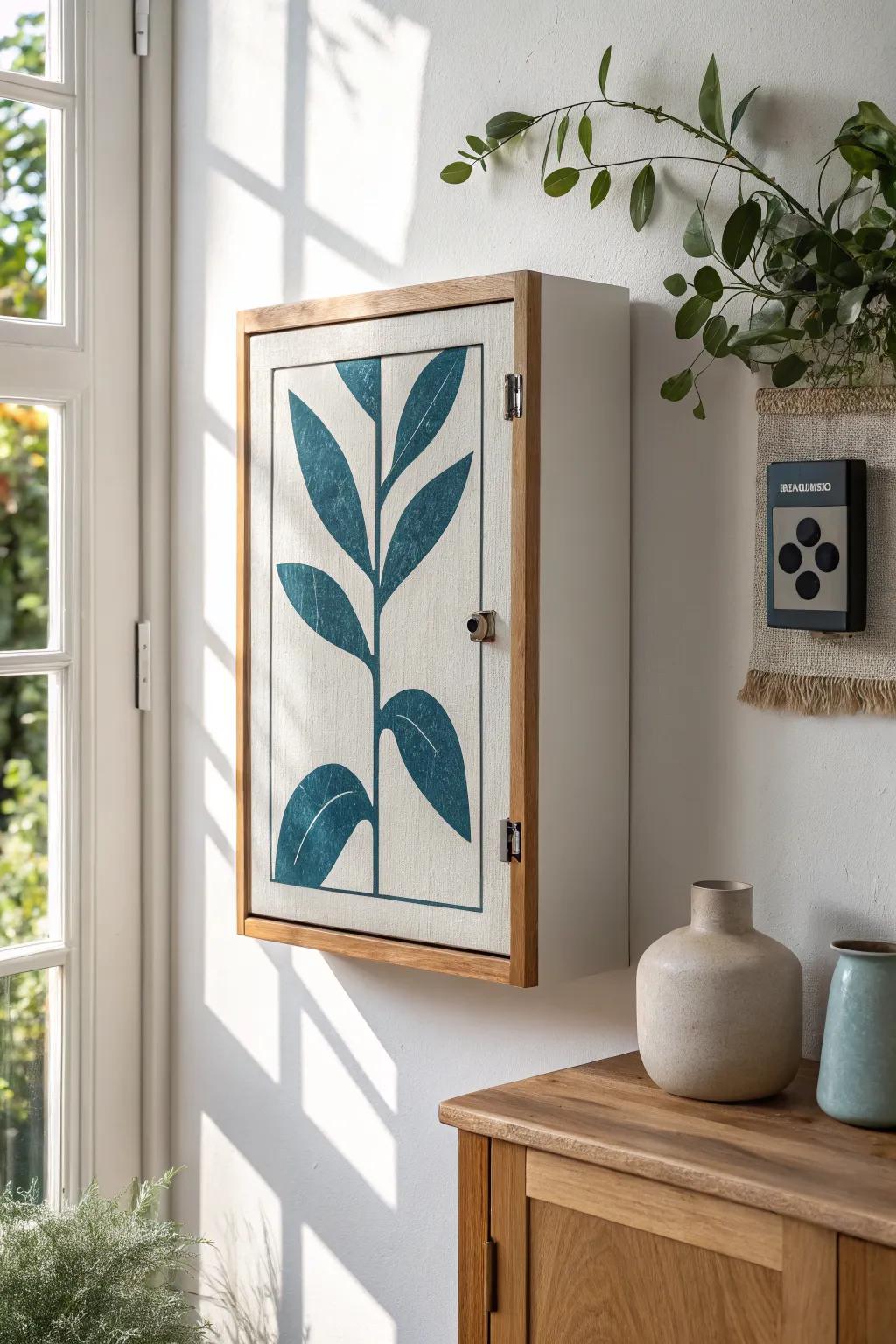
In one basement studio I styled, the breaker box was right in the main living zone, so I covered it with a removable art panel and treated it like part of a gallery wall. It’s such a simple basement apartment fix, and it instantly makes the room feel more finished.
A few choices to try:
- Decorative Breaker Box Covers: Conceal unsightly fuse boxes easily with a dedicated cover that blends seamlessly into your existing home decor.
- Hinged Canvas Art Frames: Use hinged canvas art to stylishly mask panels while maintaining easy access to your breakers whenever needed.
- Deep Shadow Box Frames: Create a custom solution by mounting these frames over protruding panels for a polished, finished apartment look.
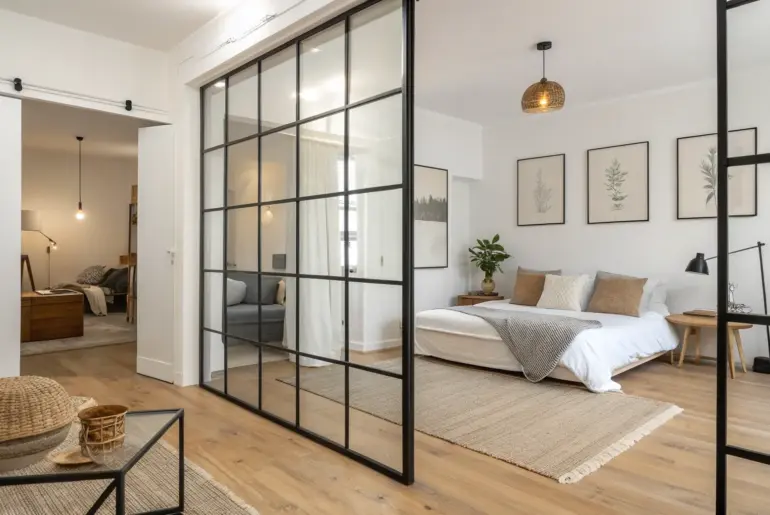
Use a Curtain Track as a Soft Divider
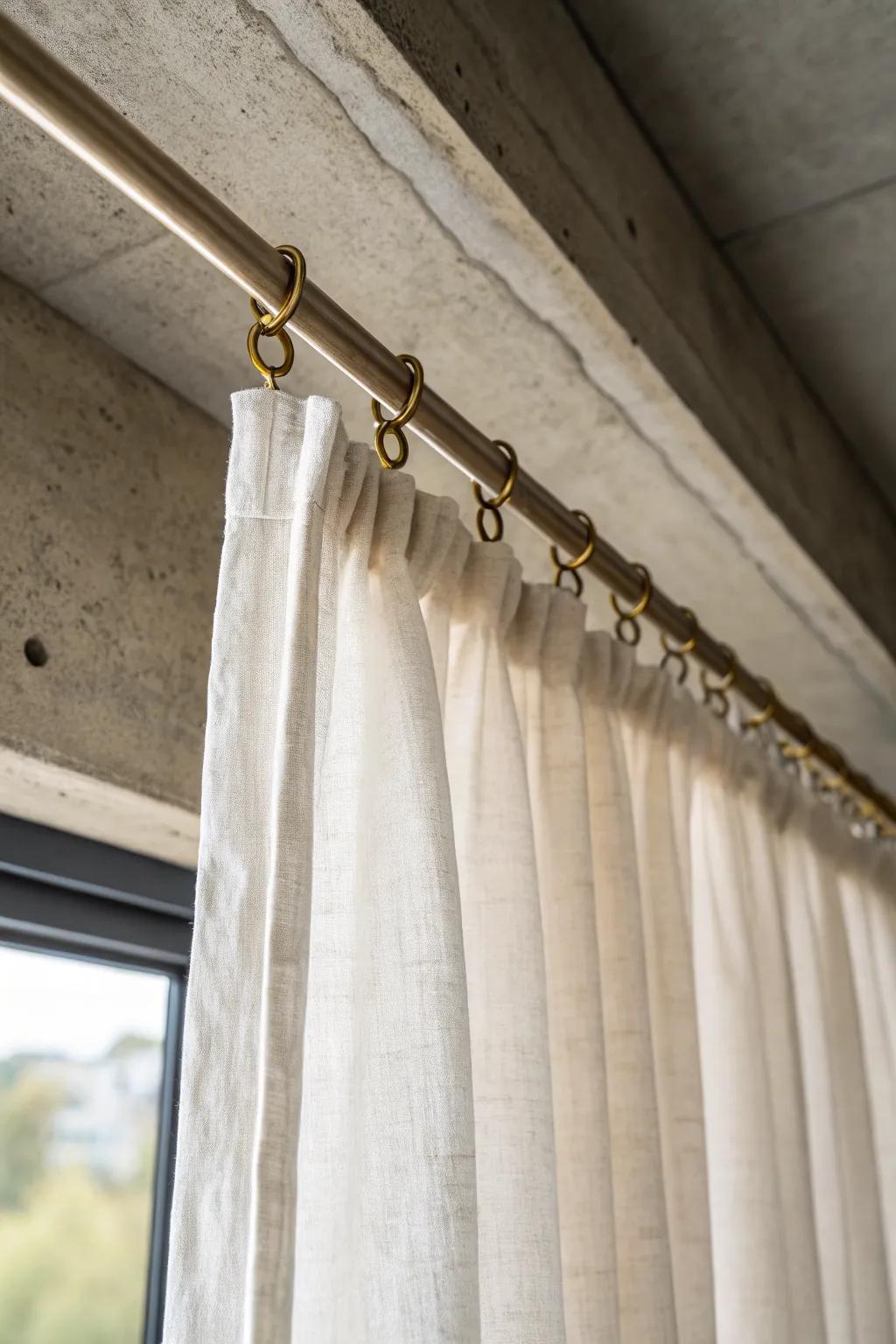
When I wanted privacy in my basement studio, I installed a simple ceiling curtain track to create a flexible room divider around the bed. I love that it closes for sleep, opens for daytime light, and doesn’t eat up inches like a bulky screen.
Items that may come in handy:
- Ceiling-Mounted Curtain Track System: Install a low-profile track system on your ceiling to create flexible room dividers without sacrificing floor space.
- Curtain Ring Clips (Gold/Metallic): Attach your fabric panels easily to any rod or track system with these durable metallic clip rings.
- Textured Linen Curtain Panels: Soften your basement’s industrial look with breathable, light-filtering linen drapes that provide privacy while letting light through.
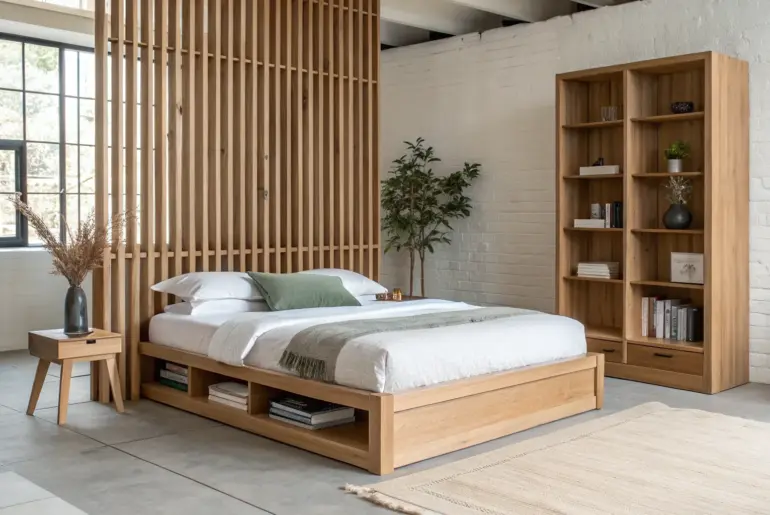
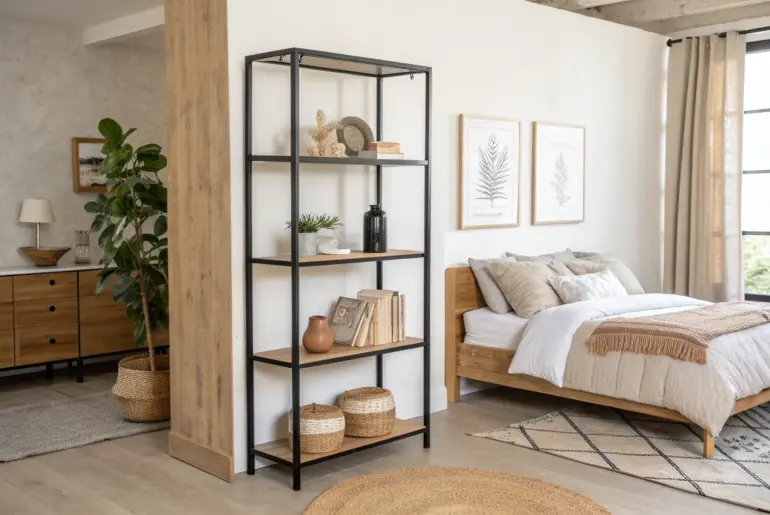
Float Open Shelving to Divide Zones
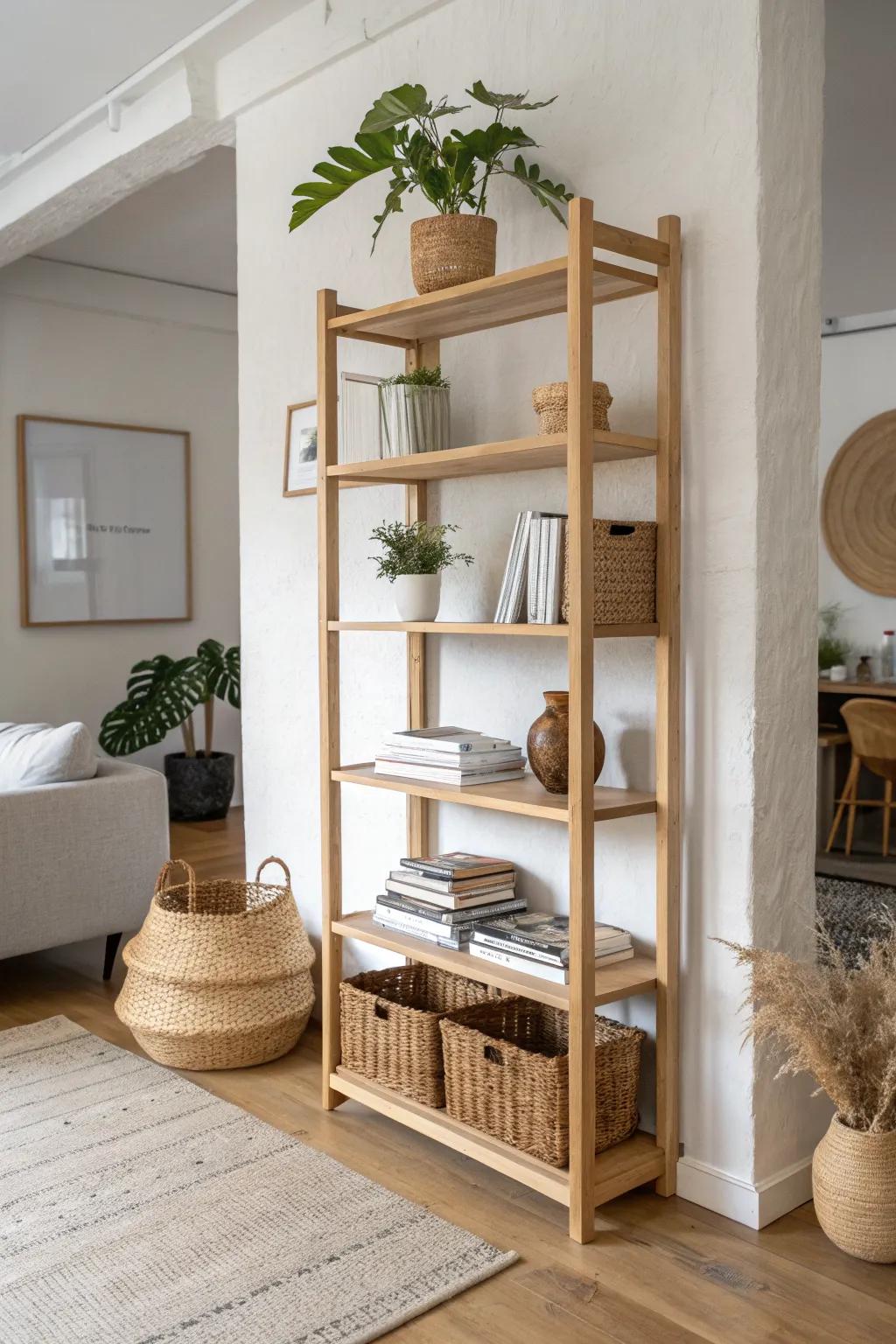
I’ve used open shelves as a room divider in a small basement apartment, and it’s the best of both worlds: storage plus separation without blocking light. I keep the styling airy—books low, baskets neat, and a little negative space—so it doesn’t turn into a visual wall.
Might be a good match:
- Tall Open Wood Bookshelf: Use a tall, backless shelving unit to create distinct zones while maintaining an airy, light-filled atmosphere.
- Woven Storage Baskets: Hide clutter on lower shelves with natural woven baskets that add texture and keep your space organized.
- Artificial Potted Plants: Add greenery to your divider without worrying about low basement light using realistic faux potted plants.
Create a Disguised Dehumidifier Nook
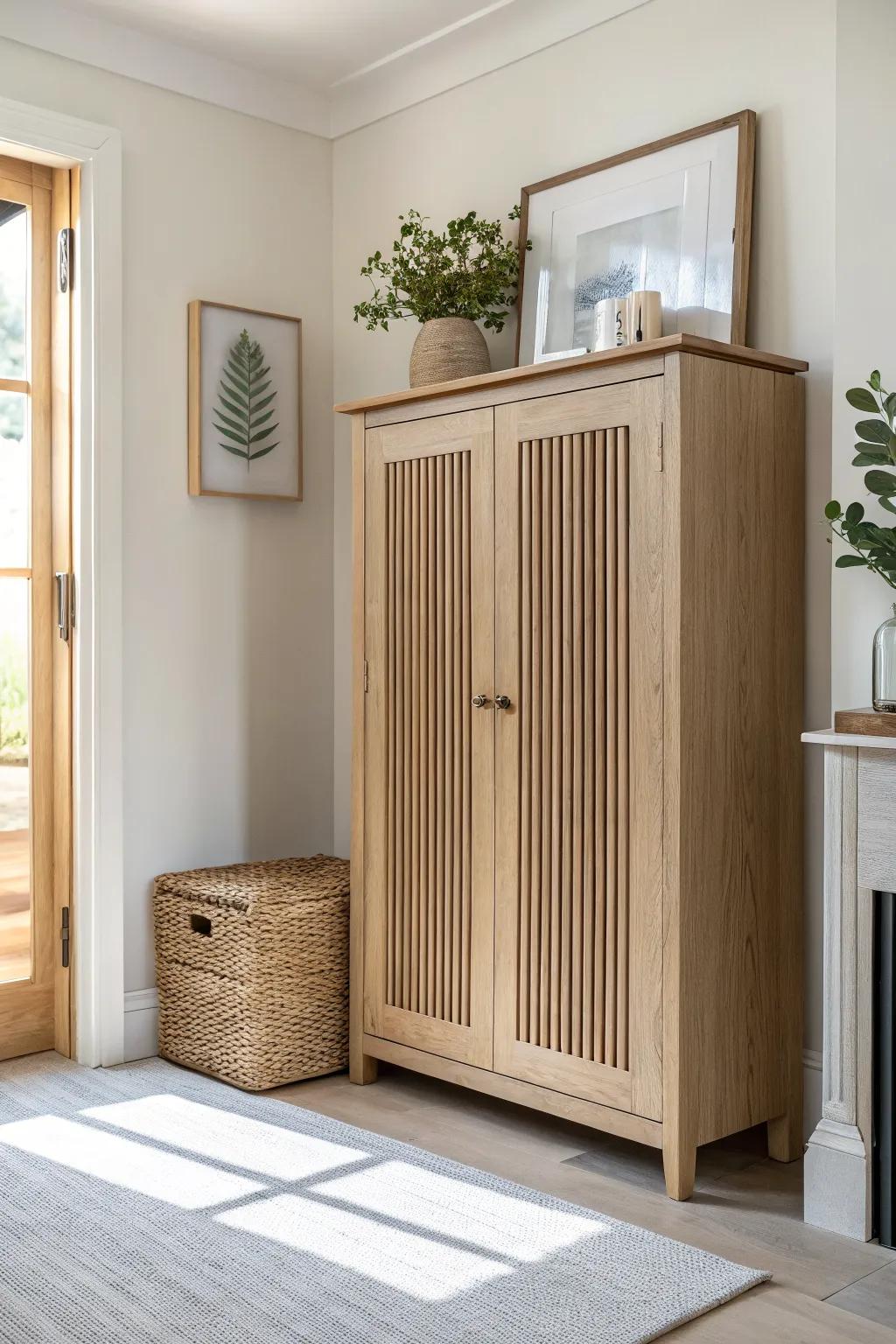
Basements need moisture control, so in my basement studio I made a ventilated “utility nook” that looks like a cabinet area but quietly houses the dehumidifier and cleaning supplies. It’s one of those unglamorous basement apartment ideas that makes the whole place feel fresher and more comfortable.
Consider these options:
- Louvered Storage Cabinet: Choose a ventilated cabinet with slatted doors to hide appliances while allowing crucial airflow for moisture control.
- Compact Home Dehumidifier: Keep your basement dry and fresh by placing a quiet, efficient moisture remover inside your ventilated cabinet.
- Woven Storage Basket: Add texture and extra hidden storage next to your utility cabinet with a sturdy, natural fiber basket.