When your living room and dining room share one open space, it can feel like everything is happening everywhere at once. The trick is adding just enough structure to create two clear zones without killing the airy vibe.
Use a Glass Partition
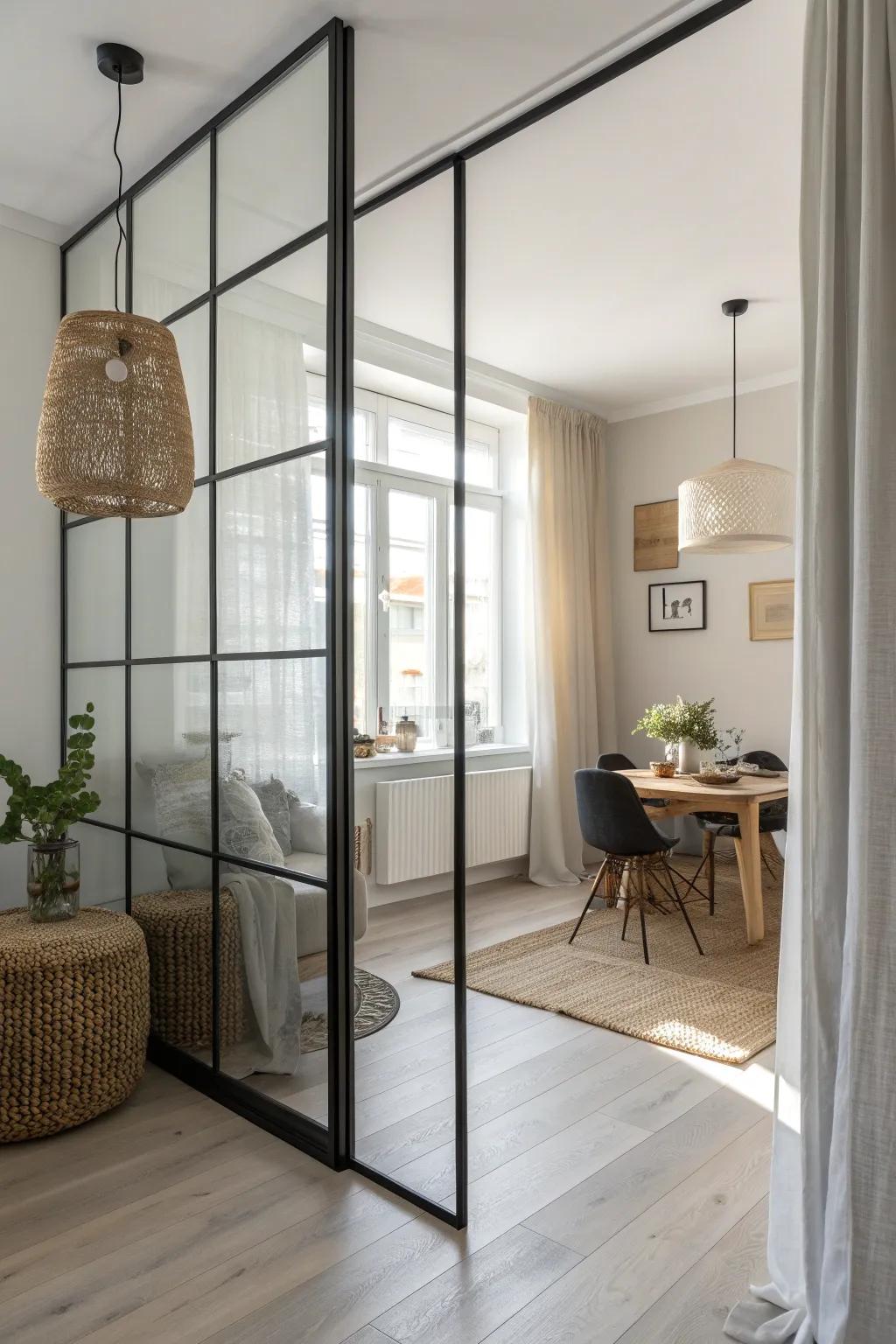
A glass divider is perfect when you want living and dining separation but refuse to lose natural light (same, honestly). I’ve installed framed glass panels for clients, and the space instantly felt structured while staying bright and open-concept.
Explore these options:
- DIY Black Grid Glass Partition Kit: Create a custom separation like the pros; install these modular panels to define your space without blocking light.
- Industrial Style Sliding Door Hardware: Add functionality to your partition idea; use this track system to hang a movable glass door or divider.
- Adhesive Black Window Pane Tape: Achieve the framed glass look on a budget; apply this tape to existing glass for an instant grid effect.
Zone With Area Rugs
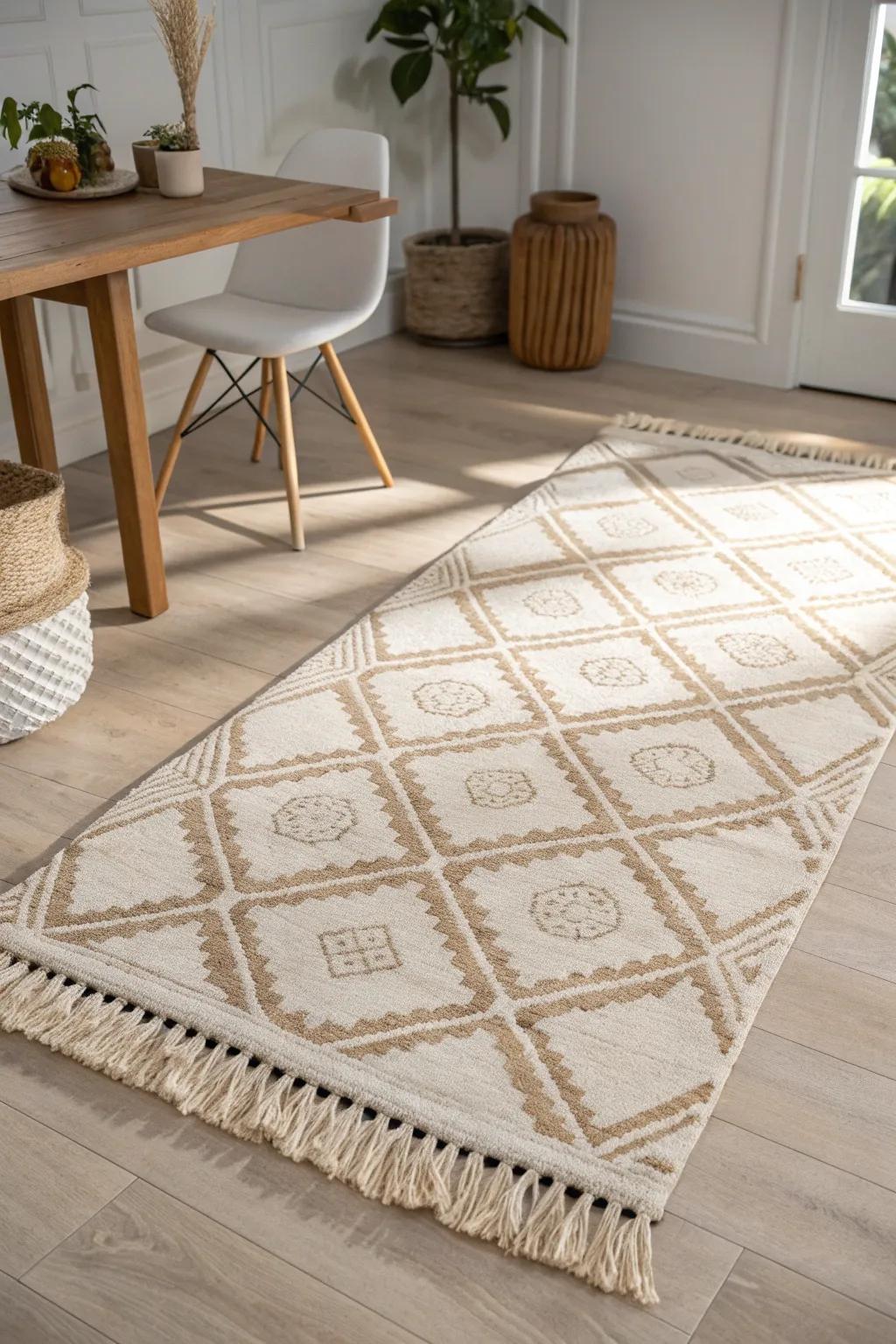
In my 450 sq ft apartment, one big area rug under the sofa instantly told my brain “living room,” while the bare floor under the table stayed “dining.” I like to keep the rug edges lined up with furniture legs so the room separation looks intentional, not random.
Check these products out:
- Boho Geometric Cotton Runner Rug: Define your walkways or smaller zones with this textured, patterned runner that adds warmth and clear visual separation.
- Non-Slip Rug Pad Gripper: Keep your new zone-defining rugs perfectly in place and prevent slipping on hard floors with a durable pad.
- Woven Seagrass Belly Basket: Store throws or plants near your rug’s edge to further anchor the space and enhance that natural, cozy aesthetic.
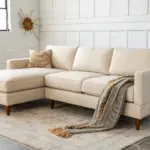
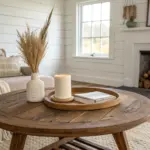
Turn the Sofa Into a Divider
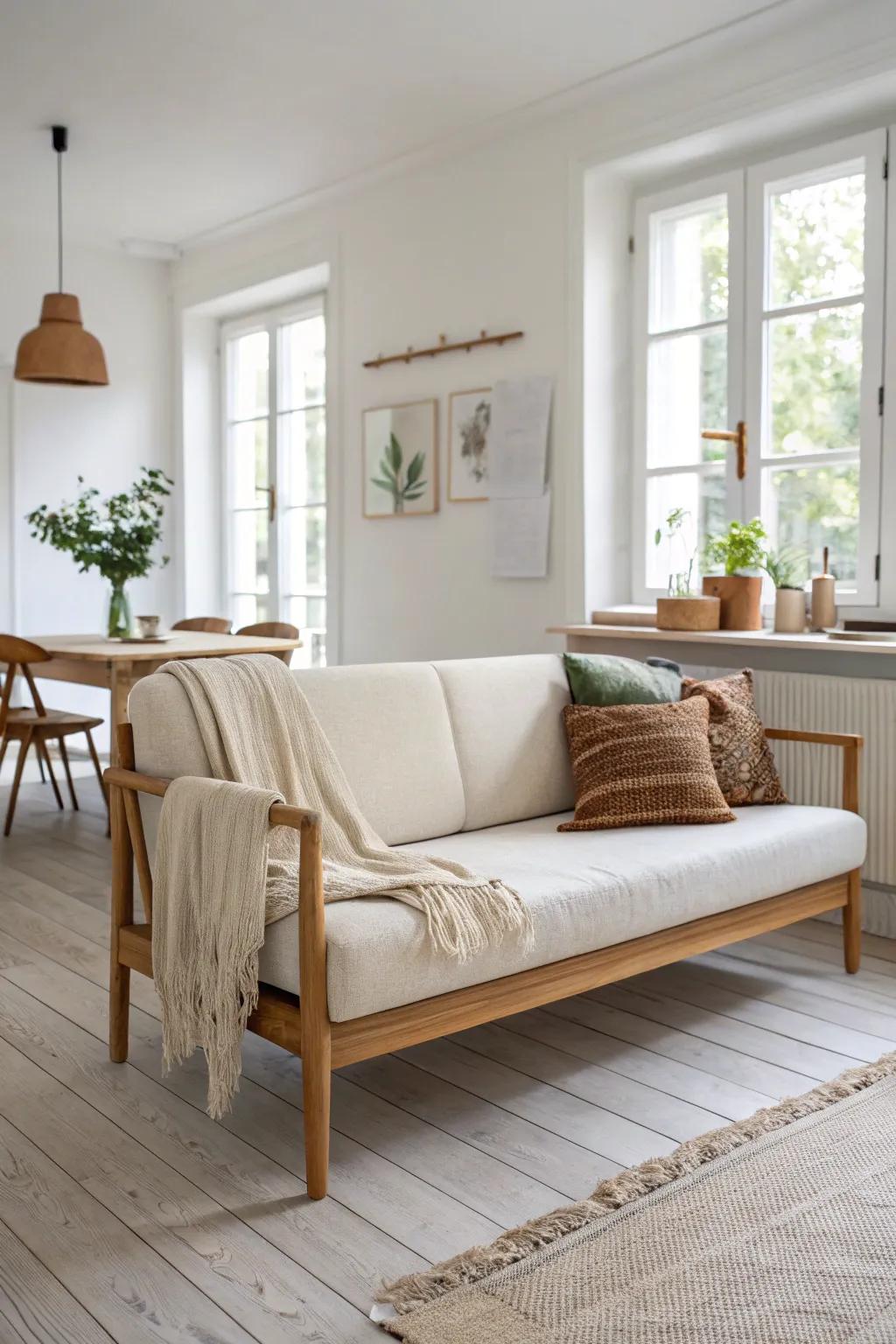
I’ve separated my living and dining rooms just by floating the sofa so its back faces the table, and it works way better than you’d expect. That simple furniture placement creates a clean boundary while keeping the whole space feeling open.
These products might help:
- Mid-Century Modern Loveseat: Create a stylish boundary between rooms with a wood-framed sofa that maintains an open, airy feeling.
- Textured Throw Blanket with Fringe: Soften the back of your sofa divider by draping a cozy, neutral throw for added texture.
- Set of Decorative Throw Pillows: Add comfort and visual interest to your seating area with pillows in earth tones like rust and green.
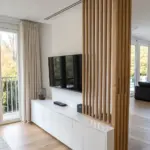
Add a Console Table Backing
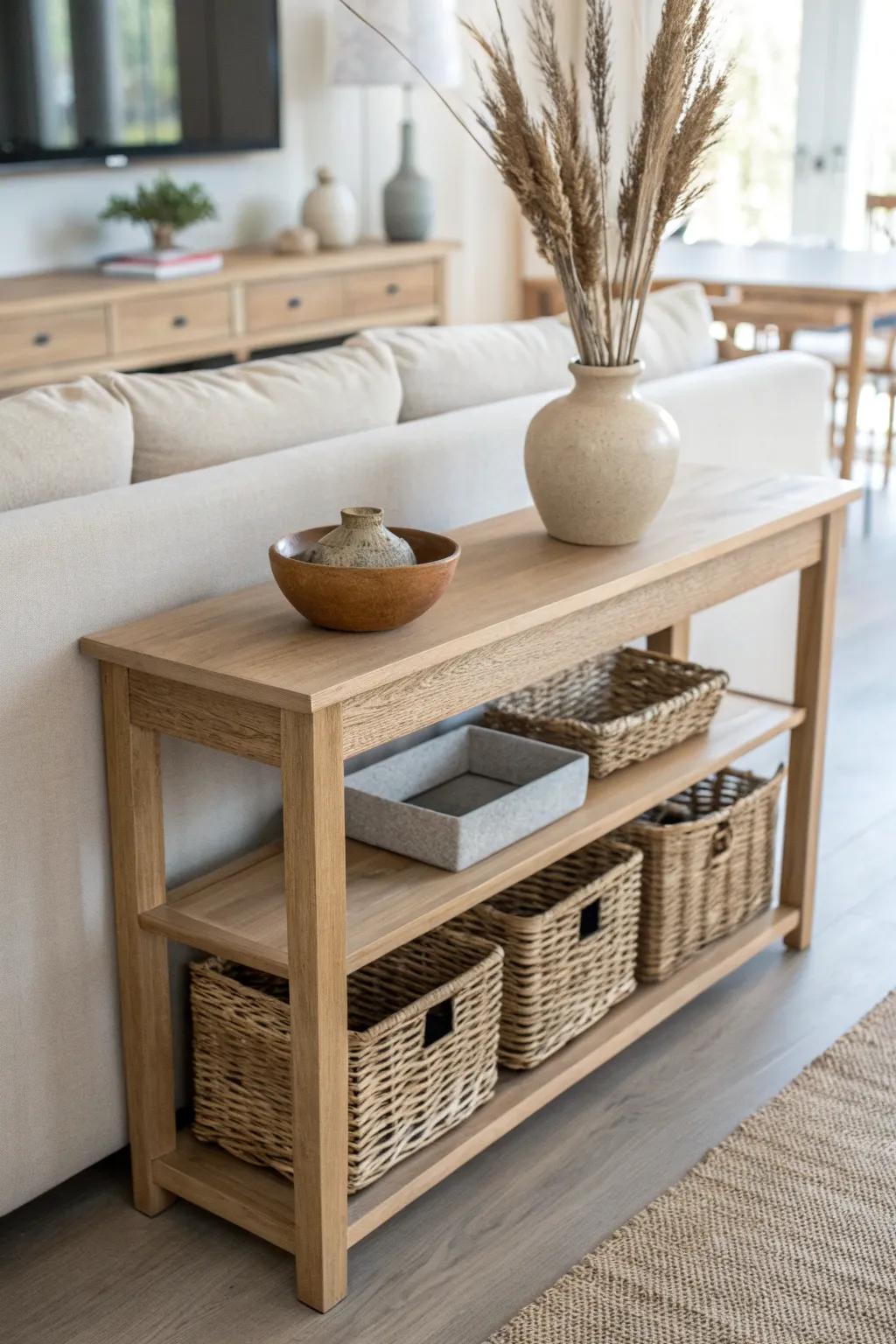
Behind my sofa, I slid in a slim console table and suddenly the dining side felt like its own zone instead of “the space behind the couch.” I also use the console for hidden storage baskets, which keeps the living-dining combo looking calm.
A few suggestions:
- Slim Wood Console Table: Define your living space with a narrow table that fits perfectly behind your sofa for stylish separation.
- Woven Storage Baskets: Keep clutter hidden and organized by sliding these natural texture baskets onto your console’s lower shelves.
- Decorative Ceramic Vase: Elevate the look of your transition zone with a neutral, textured vase for dried florals or branches.
Ground the Dining Table With Lighting
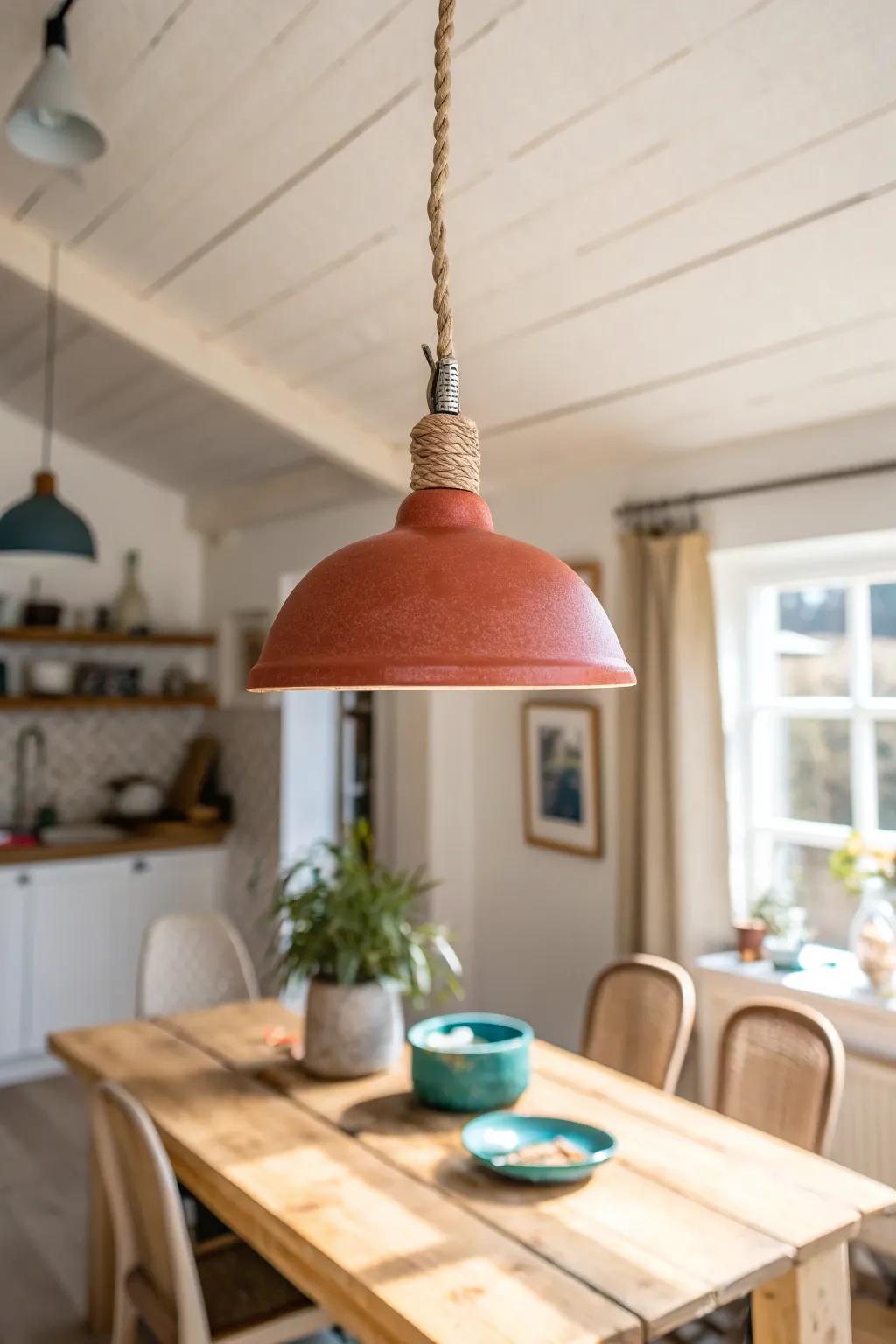
A centered pendant light over my dining table made the dining area feel like a “room” even though there aren’t walls. I always aim the rest of my lighting (lamps, softer bulbs) toward the living side for extra zone definition.
A few things you might like:
- Rustic Terracotta Style Pendant Light: Anchor your dining space with a warm, textured pendant that creates an instant focal point over the table.
- Jute Rope Electrical Cord Kit: Add organic texture to your lighting fixture with a natural hemp rope cord that enhances rustic charm.
- Warm LED Edison Bulbs: Create a cozy, defined atmosphere by choosing soft, warm-toned bulbs that differentiate the dining zone from others.
Use an Open Shelf Divider
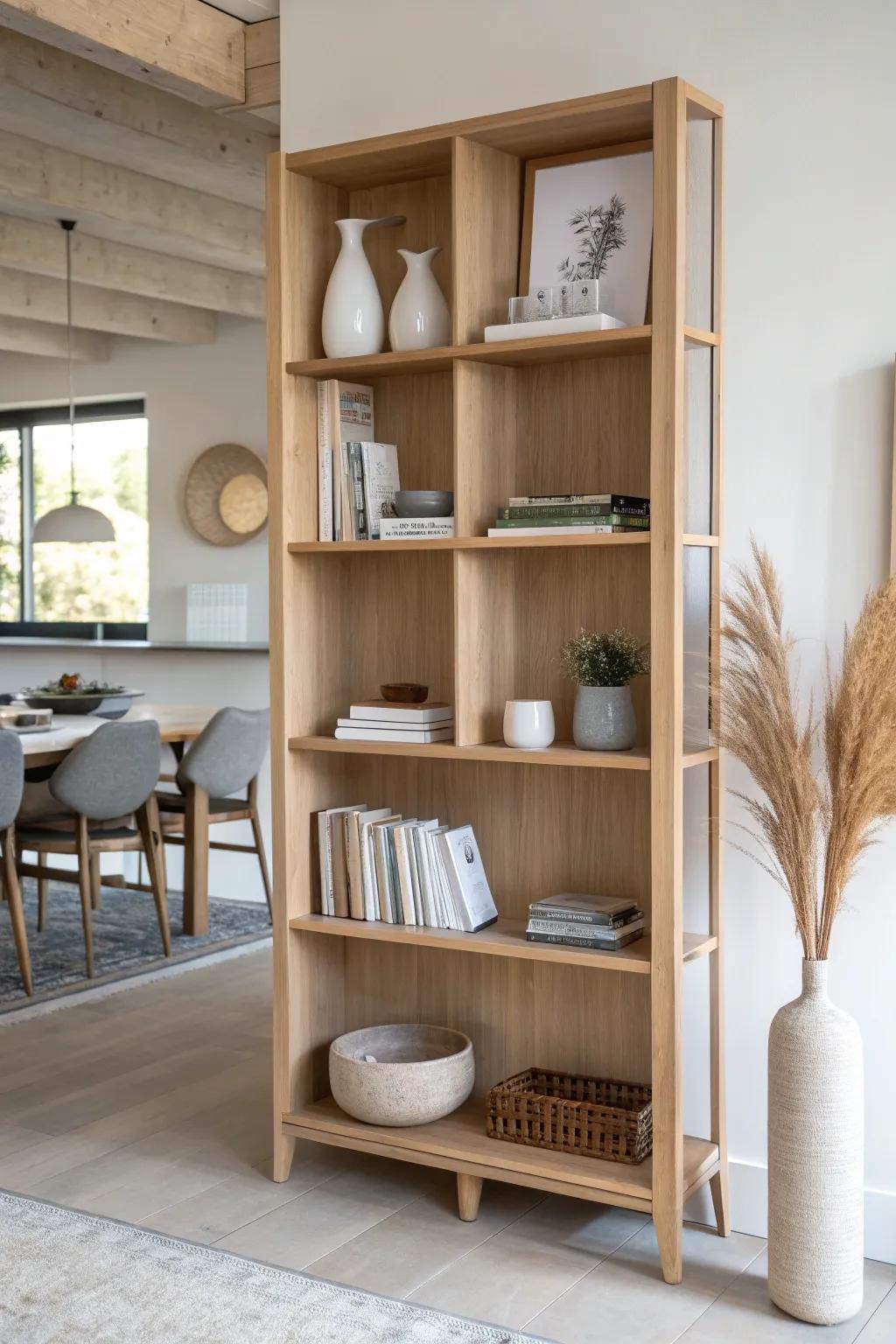
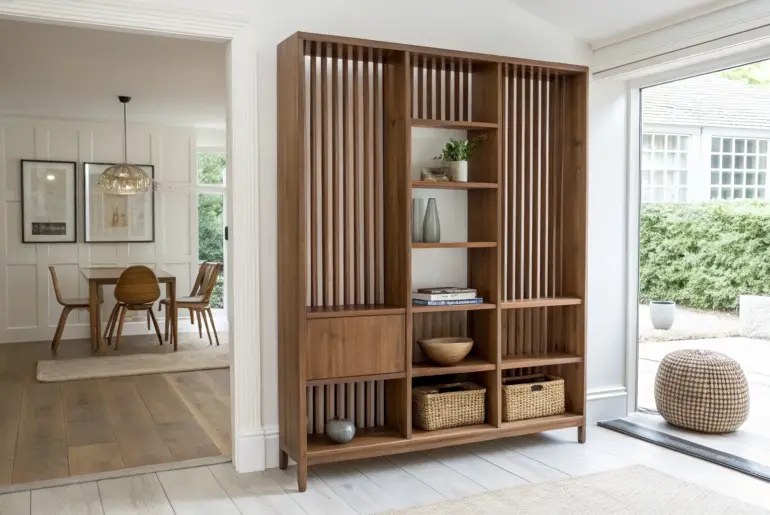
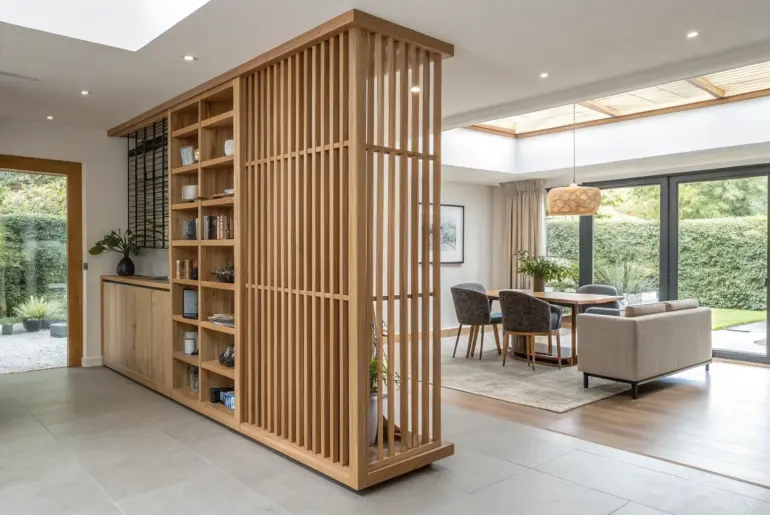
One of my go-to tricks is placing open shelving between the living and dining spaces so you get separation plus storage. I style mine with books and ceramics facing both ways, so the divider looks finished from every angle.
Items that may come in handy:
- Open back wooden bookcase: Divide your space seamlessly with an open shelving unit that allows light to pass through while creating distinct zones.
- Decorative white ceramic vases: Style your shelves with modern ceramic vases to add texture and visual interest to your new room divider.
- Woven storage baskets: Keep smaller items organized and hide clutter on lower shelves using natural woven baskets for a tidy look.
Try a Two-Sided Bookcase
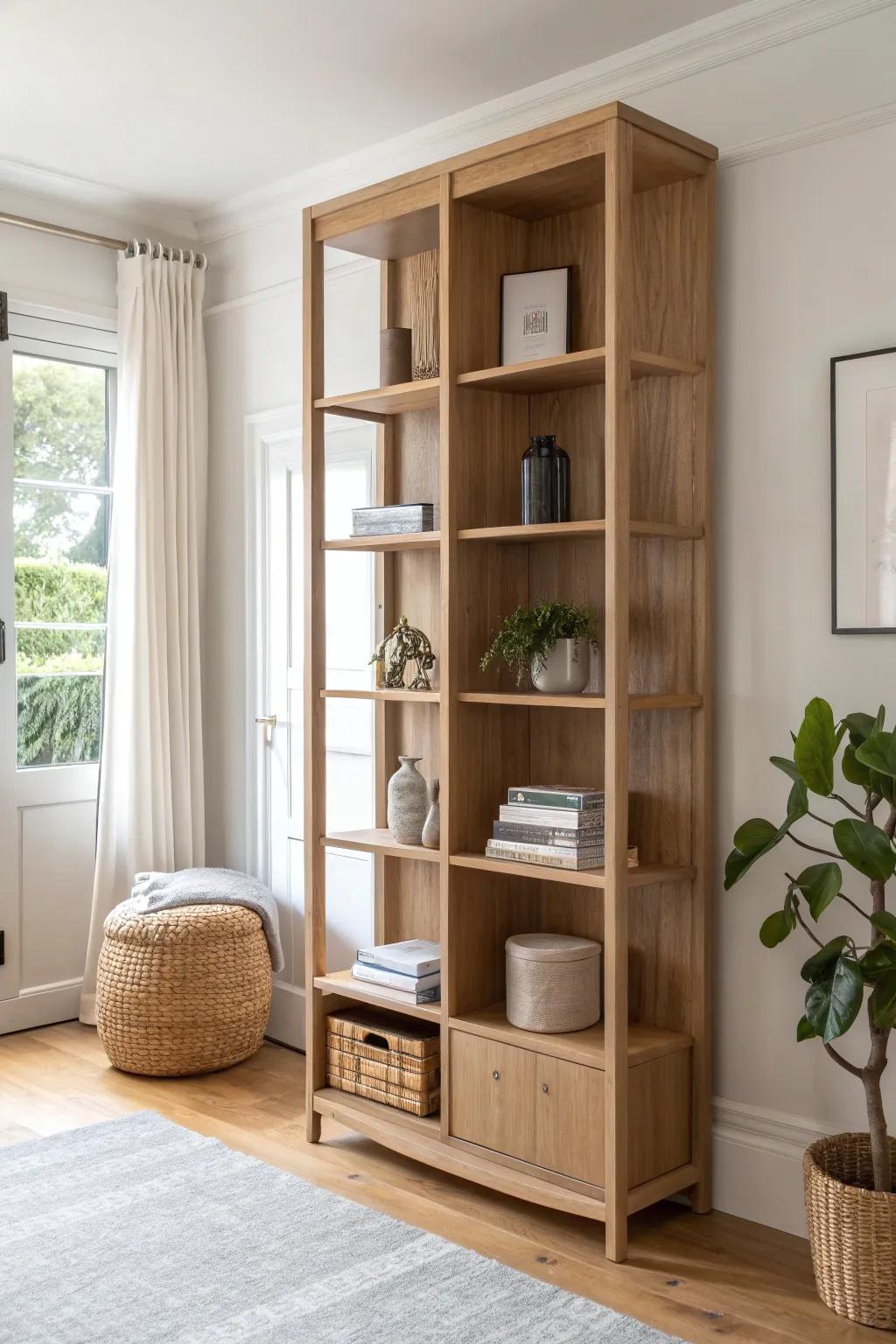
I once used a tall bookcase divider and treated it like a “shared wall” for both my living and dining room. Keeping the shelves airy (some empty space, a few plants) gave me visual separation without making either side feel dark.
Give these a look:
- Open-Back Bookshelf: Create a distinct room boundary while maintaining light flow by positioning this airy shelving unit centrally.
- Small Potted Artificial Plant: Add greenery to your divider shelves for a fresh look without worrying about sunlight access or watering.
- Woven Storage Baskets: Organize lower shelves neatly with textured baskets to hide clutter and anchor the room’s visual weight.
Add a Folding Screen
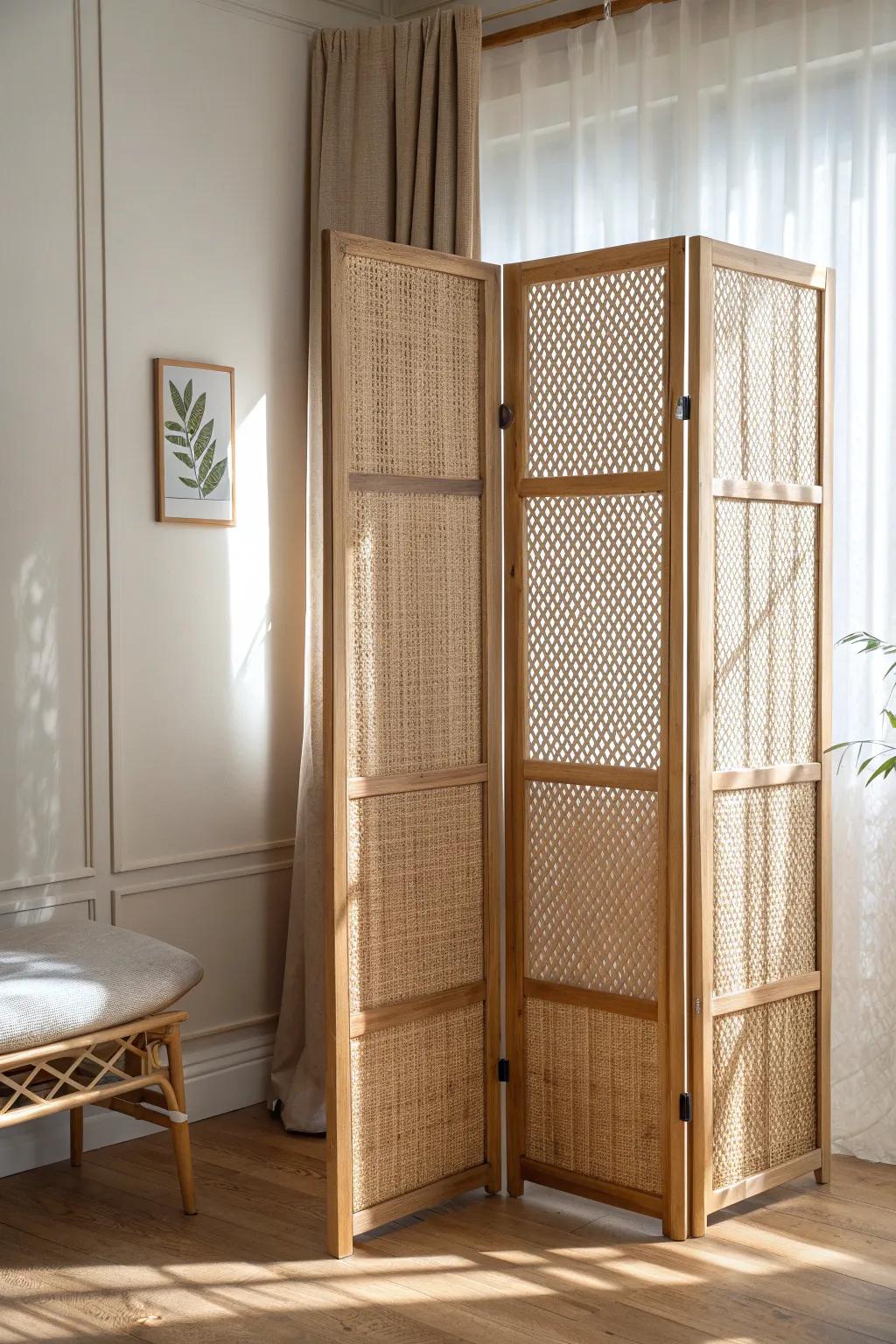
When I wanted flexible living-dining separation, I used a folding room screen that I could shift depending on the day. It’s such a quick fix for hiding the dining clutter when you’re lounging on the couch.
Possibly handy products:
- Rattan Folding Room Divider: Instantly create privacy and define your living zone with a warm, natural rattan folding screen.
- Solid Wood Screen Hinges: Use these durable replacement hinges to repair or custom-build your own flexible wooden room partition.
- Floor Protector Felt Pads: Protect your hardwood floors from scratches when moving your screen with these adhesive felt pads.
Hang Ceiling-Mounted Curtains
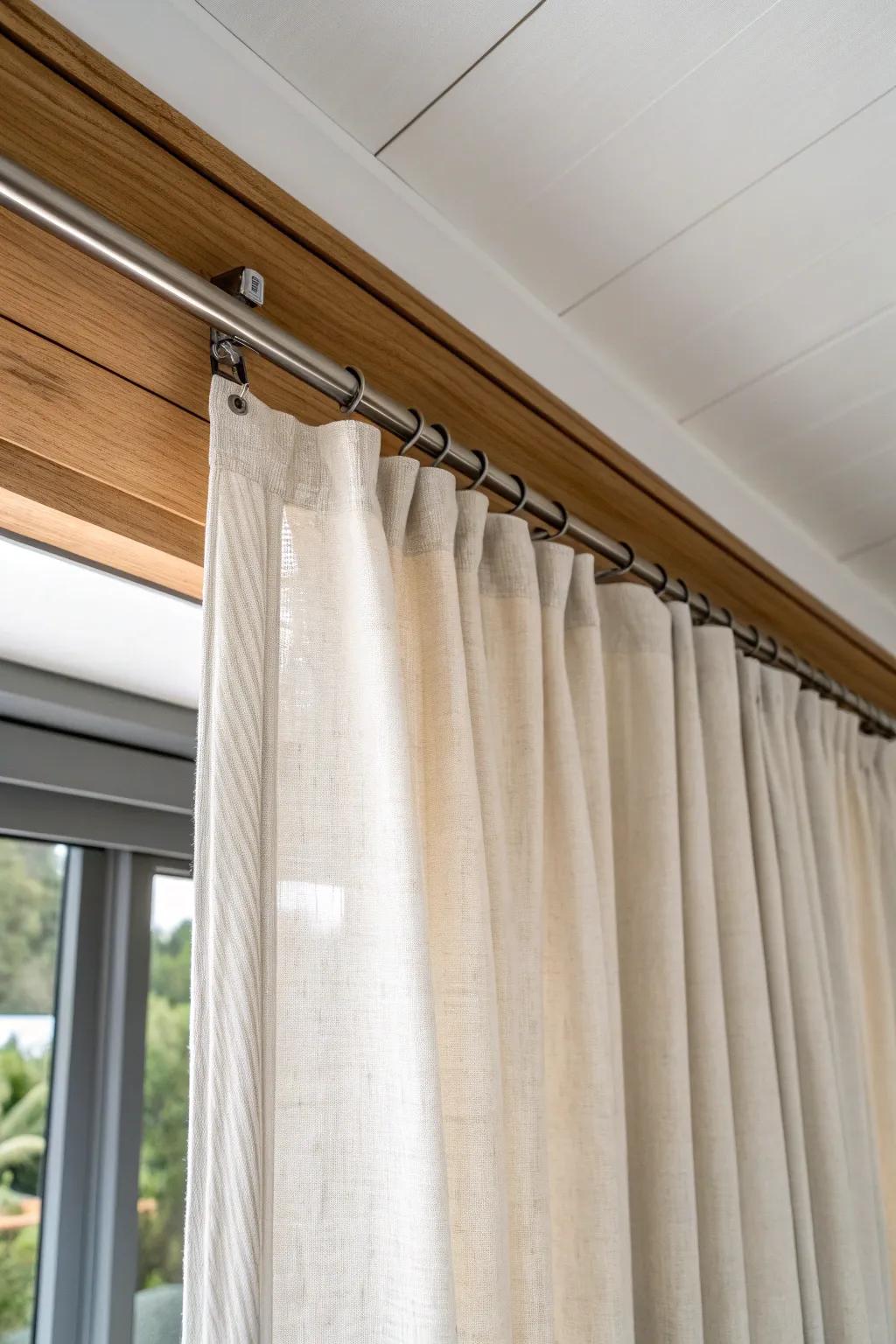
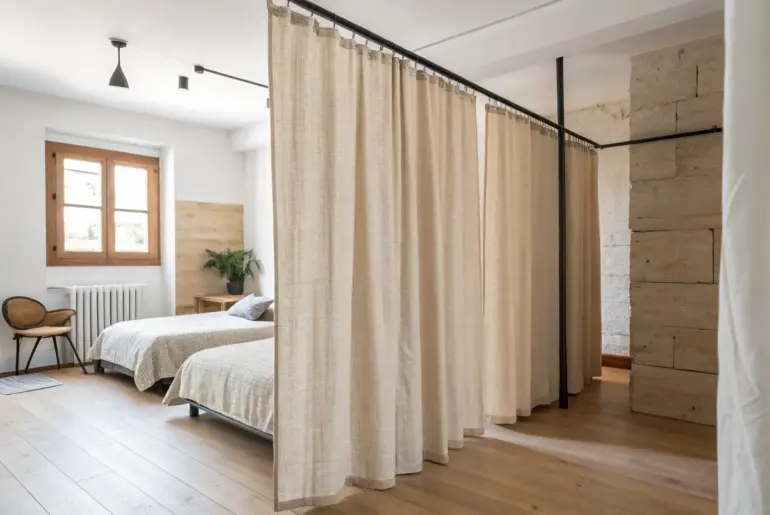
I’ve used ceiling-track curtains to split living and dining zones, and it feels cozy at night without committing to a wall. I like sheers when I want a soft boundary and thicker fabric when I need real visual privacy.
Maybe worth checking out:
- Heavy Linen-Textured Curtain Panels: Choose substantial, linen-style drapes to create a soft yet structured divider that offers both elegance and privacy.
- Industrial Ceiling Curtain Track Set: Install a sturdy ceiling-mounted rod or track system to effortlessly glide your curtains and define your space.
- Curtain Ring Clips: Use simple metal ring clips for a smooth sliding mechanism that adds a modern touch to your installation.
Build a Low Buffet Ledge
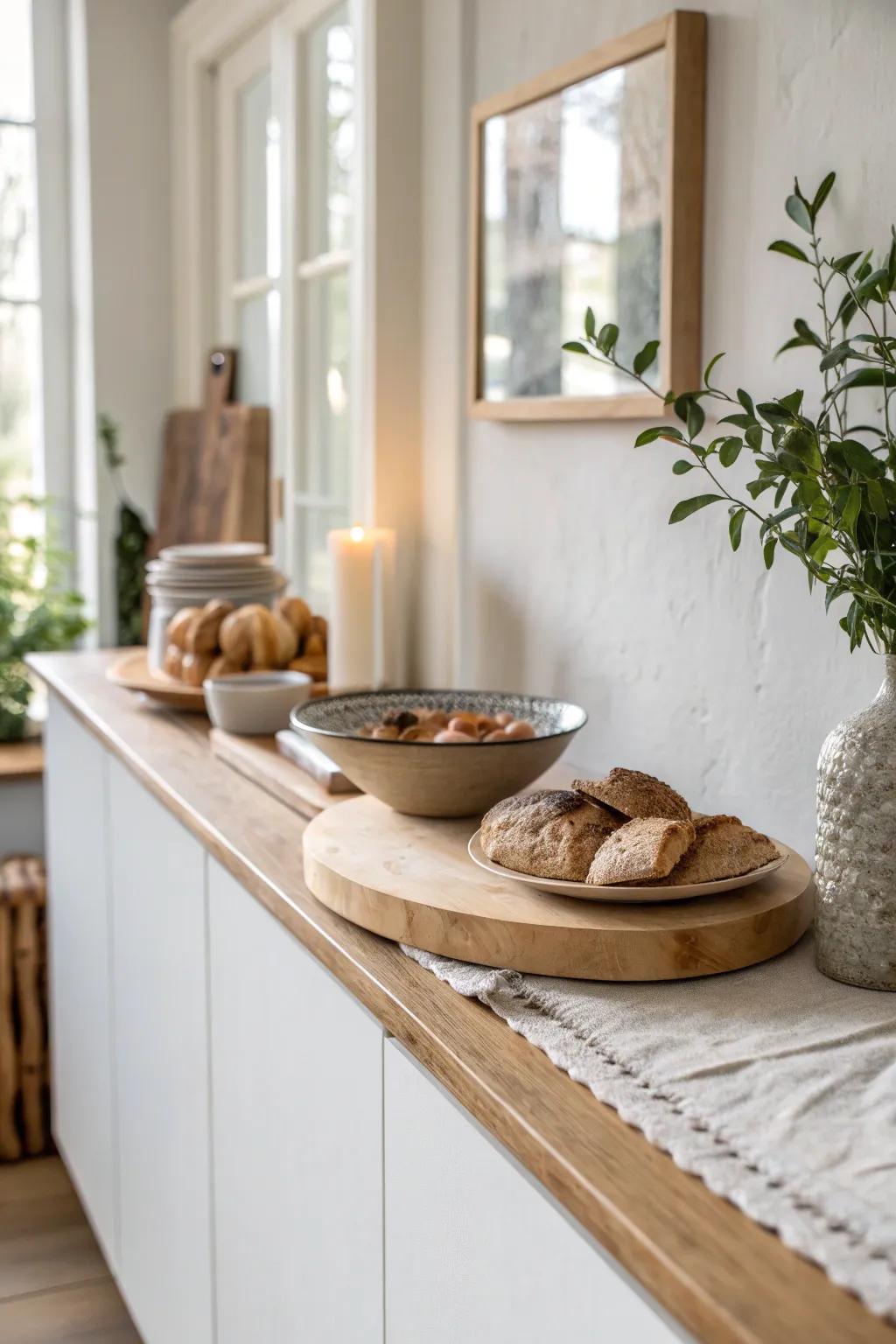
A short half wall (or even a low ledge) between the living room and dining room gives you separation without closing things off. In my last studio, I used that ledge like a mini buffet for serving dishes and styling.
A few relevant products:
- Round Wooden Serving Board: Use thick, natural wood boards to elevate plates or serving dishes, adding warmth and varying height to your display.
- Ceramic Textured Vase: Add a touch of greenery to your ledge with a neutral, textured ceramic vase that complements earthy tones.
- Stoneware Serving Bowl: Choose wide, shallow stoneware bowls in neutral or earthy glazes to beautifully present fruits, breads, or snacks.
Place a Storage Cabinet Between
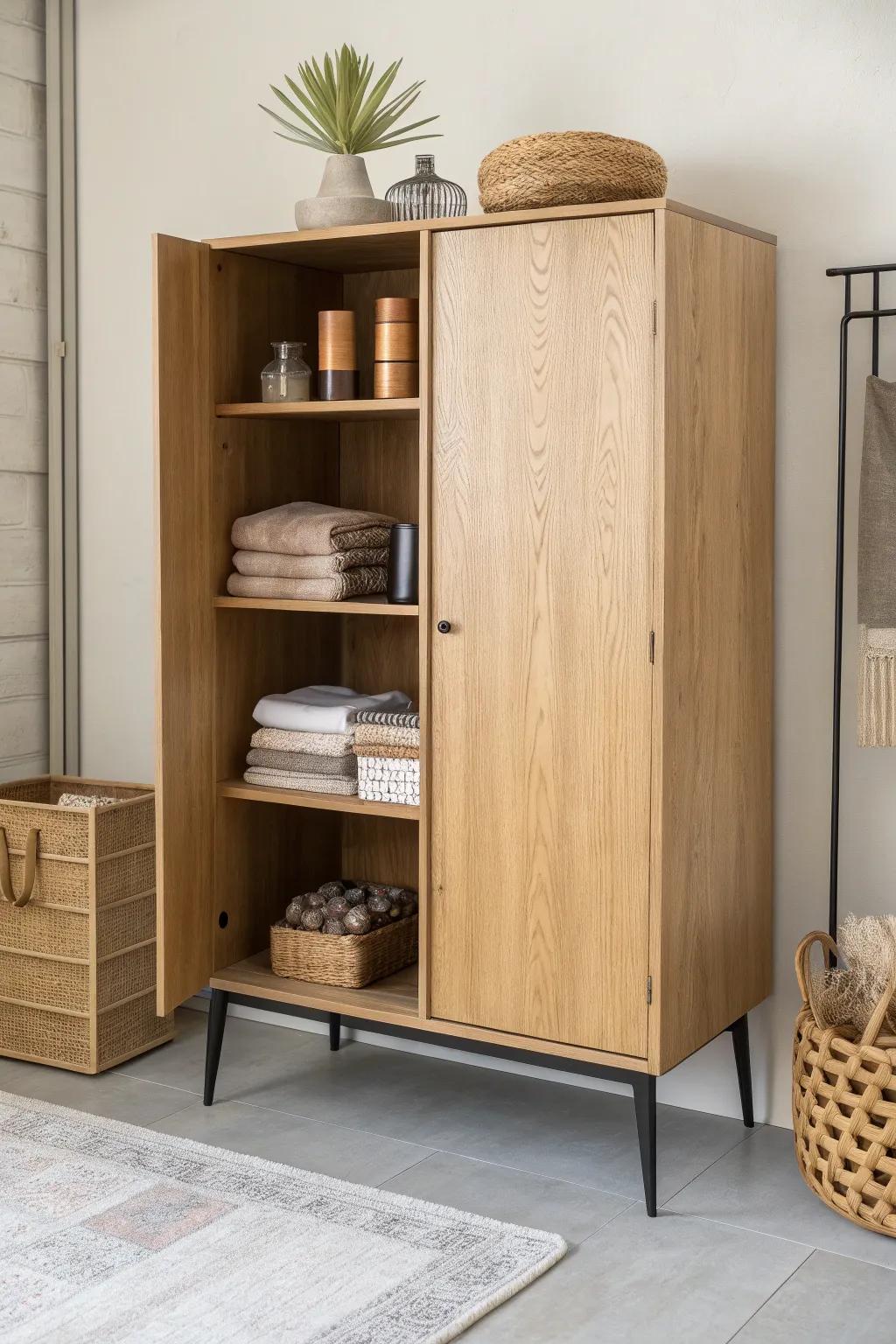
I love using a waist-high storage cabinet as the line between living and dining because it’s separation plus function. In my own setup, I keep extra napkins and candles on the dining side and board games on the living side for true double-duty.
You might like:
- Freestanding Storage Cabinet: Establish a distinct boundary between rooms while gaining ample space for linens, games, or dining essentials.
- Woven Storage Baskets: Organize your shelves beautifully with textured baskets perfect for hiding clutter and adding natural warmth.
- Decorative Vase: Style the top of your cabinet with a modern vase to create an elegant focal point.
Create a Plant Wall Divider
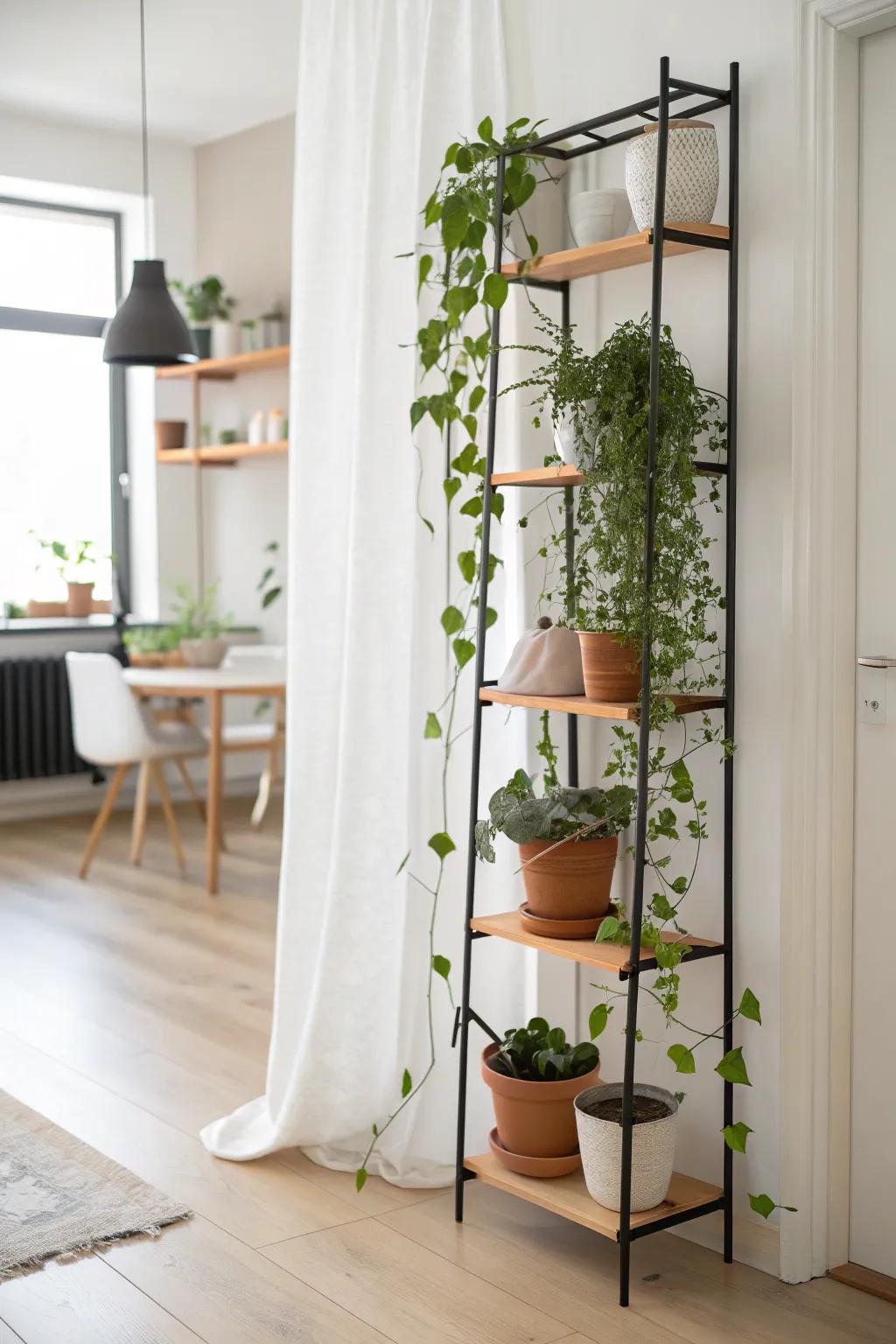
A freestanding plant wall is such a pretty way to separate living and dining, and it softens everything visually. I tried this with a simple rack and trailing plants, and the result was a fresh green divider that still felt airy.
Useful items to consider:
- Tall Industrial Shelving Unit: Choose a tall, open-frame shelving unit to create vertical height and distinct zones without blocking natural light.
- Trailing Vining Plants: Select trailing varieties like Pothos or Ivy to drape elegantly over shelves, adding lush greenery and privacy.
- Modern Ceramic Planters: Use a mix of neutral ceramic pots to house your greenery and add a cohesive, polished look.
Line Up Tall Planters
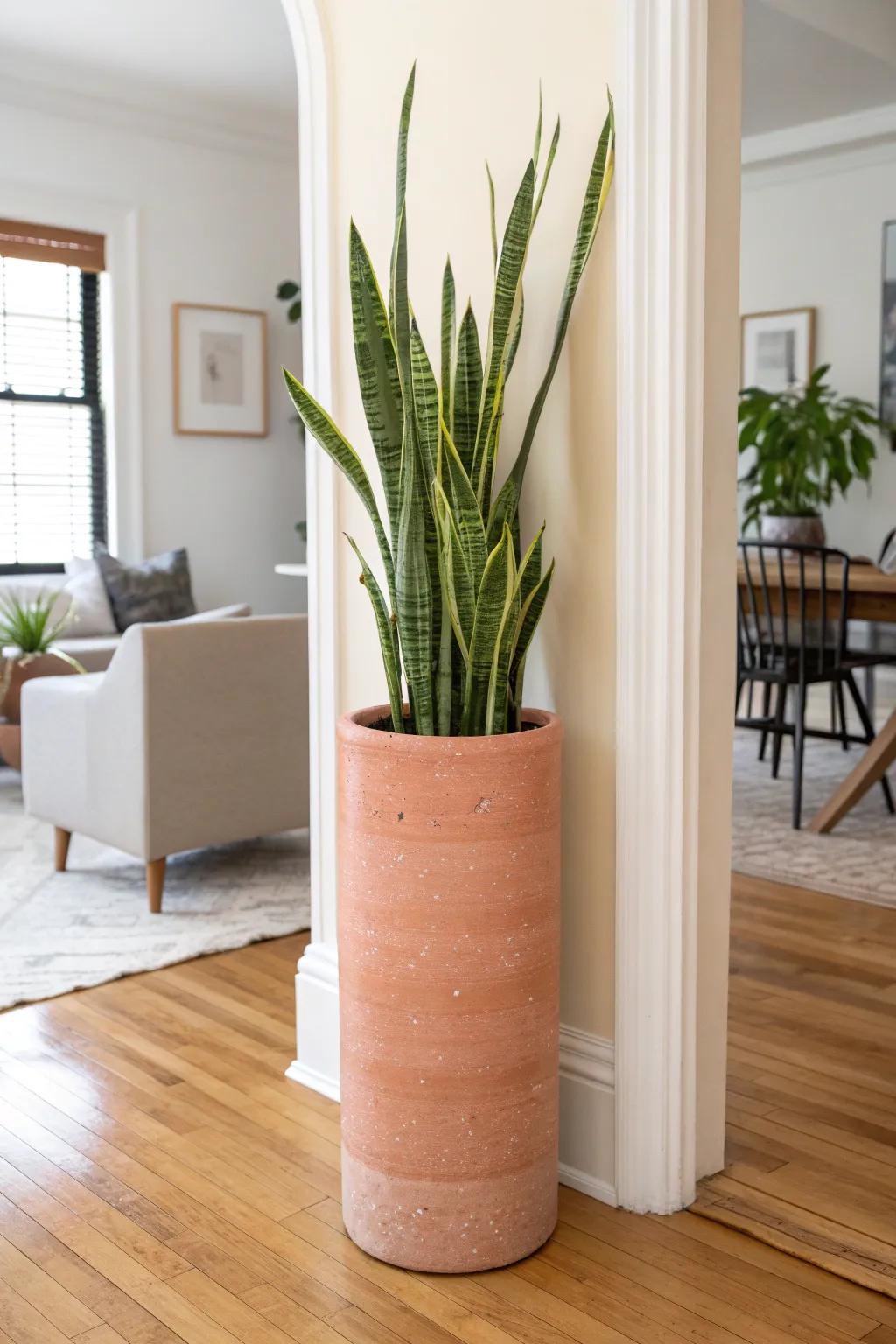
When I need separation without blocking sightlines, I line up a few tall planters between the living area and dining table like a little indoor fence. I’ve done this in rentals where nothing can be mounted, and it’s instant zone separation with zero tools.
Some ideas to consider:
- Tall Cylindrical Planter: Create an effortless divider with a sleek, tall planter that adds vertical interest to your open-plan space.
- Live Snake Plant: Fill your new planters with hardy snake plants to add height and greenery without requiring constant maintenance.
- Rectangular Divider Planter: Opt for a long, rectangular trough planter to form a more solid, fence-like boundary between your living zones.
Color Block the Two Zones
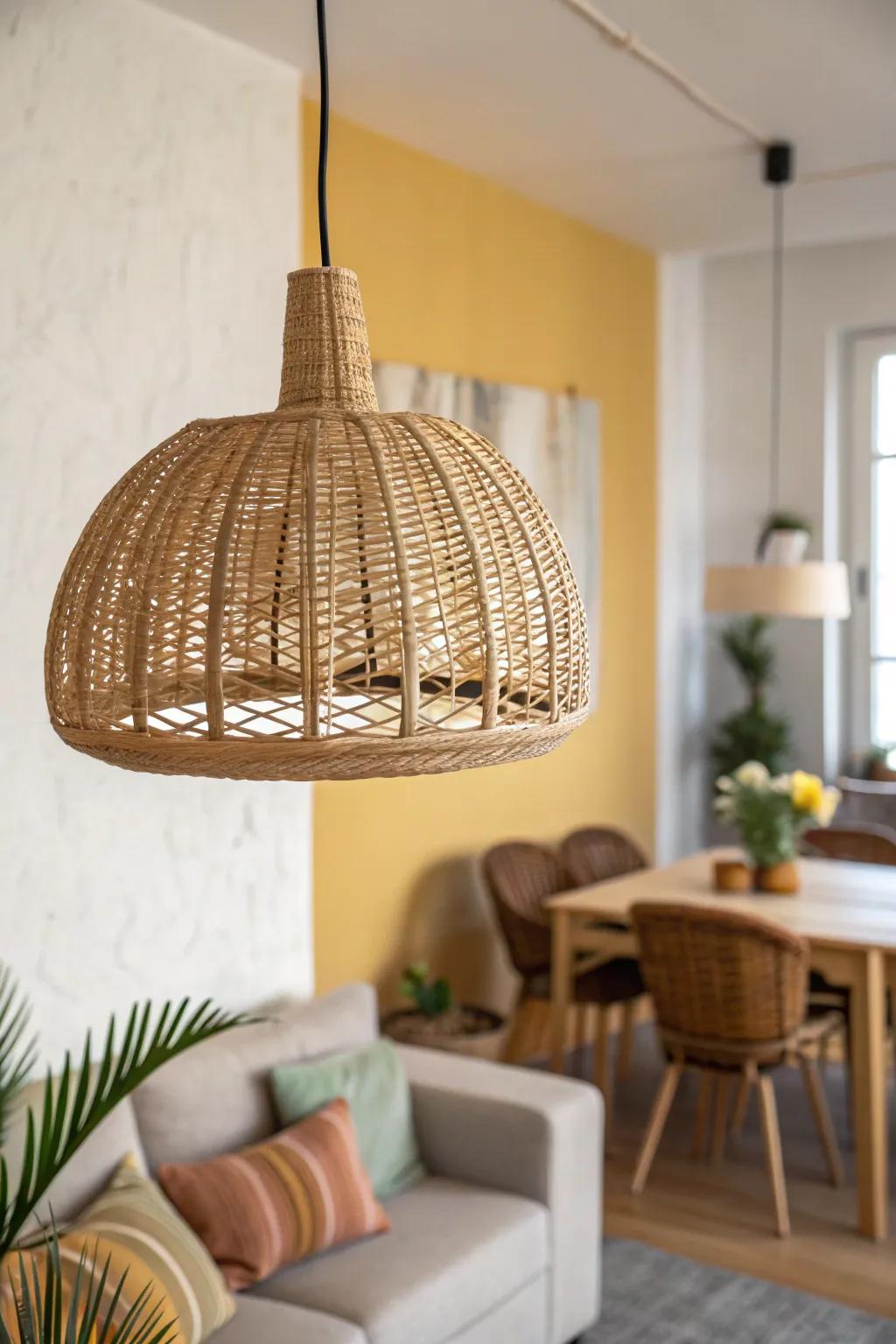
I’ve painted (or used removable wallpaper) to give the living room and dining room their own color zones, and it’s surprisingly powerful. Even one accent wall behind the dining table creates a clear visual boundary without adding furniture.
Try these:
- Mustard Yellow Peel and Stick Wallpaper: Create a bold accent wall instantly to define your dining zone without the permanence or mess of paint.
- Textured Wall Paint Roller Kit: Apply your chosen accent color smoothly and professionally to create a clear visual boundary between your spaces.
- Large Area Rug (Neutral): Ground the sofa area visually and enhance the color separation effect by creating distinct floor-level zones.
Use a Runner as a “Border”
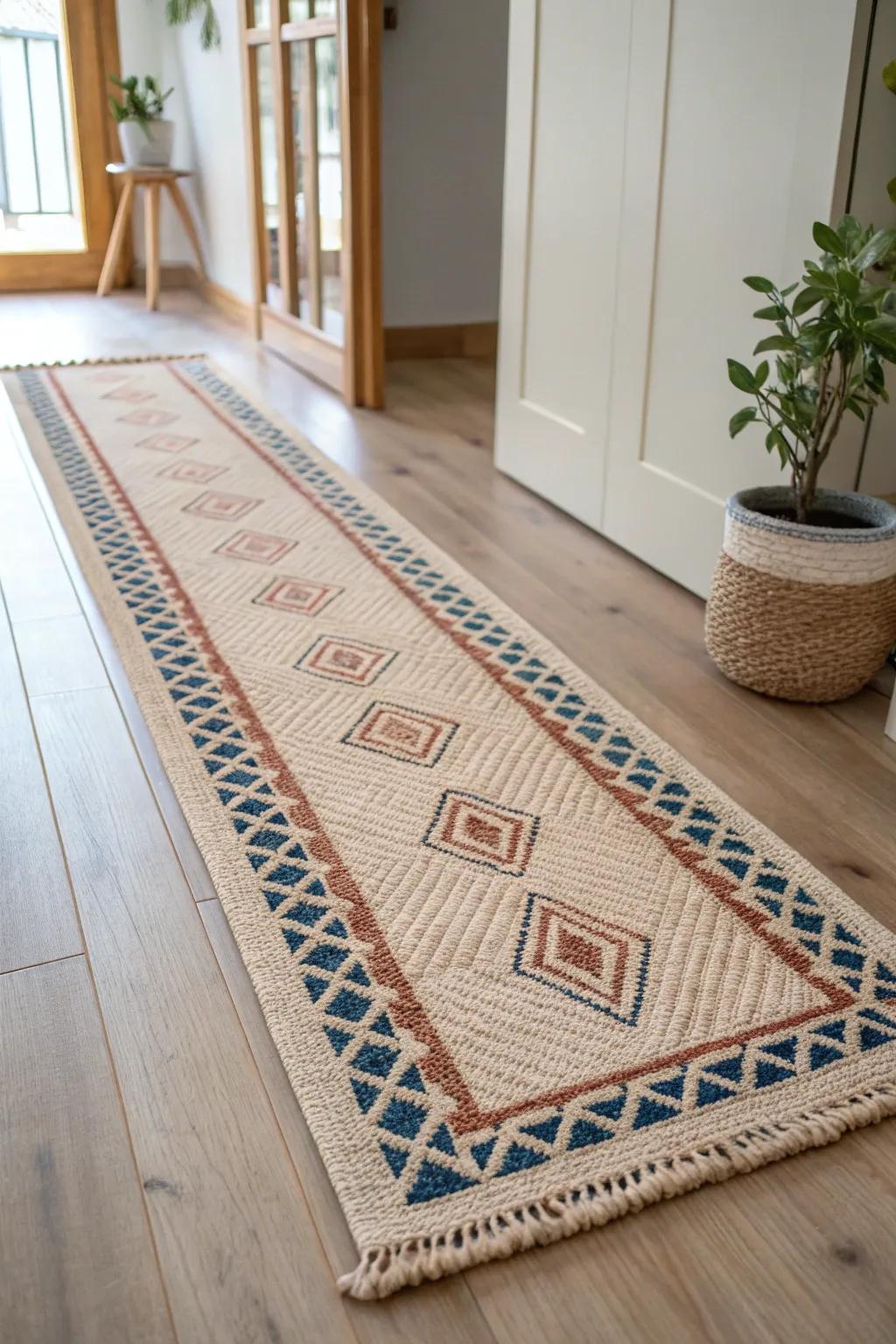
In a narrow open layout, I’ve used a long runner rug as a subtle border between the living and dining zones. It sounds simple, but that little strip tells your eye exactly where one area ends and the other begins—my favorite kind of no-build separation.
These products might be useful:
- Boho Geometric Runner Rug: Define your spaces effortlessly with a patterned runner that adds visual interest and distinct separation.
- Non-Slip Rug Pad Gripper: Keep your runner securely in place on hardwood floors to prevent slipping and maintain tidy borders.
- Woven Basket Planter: Anchor the end of your runner and add natural texture with a stylish woven plant basket.
Define Zones With Ceiling Details
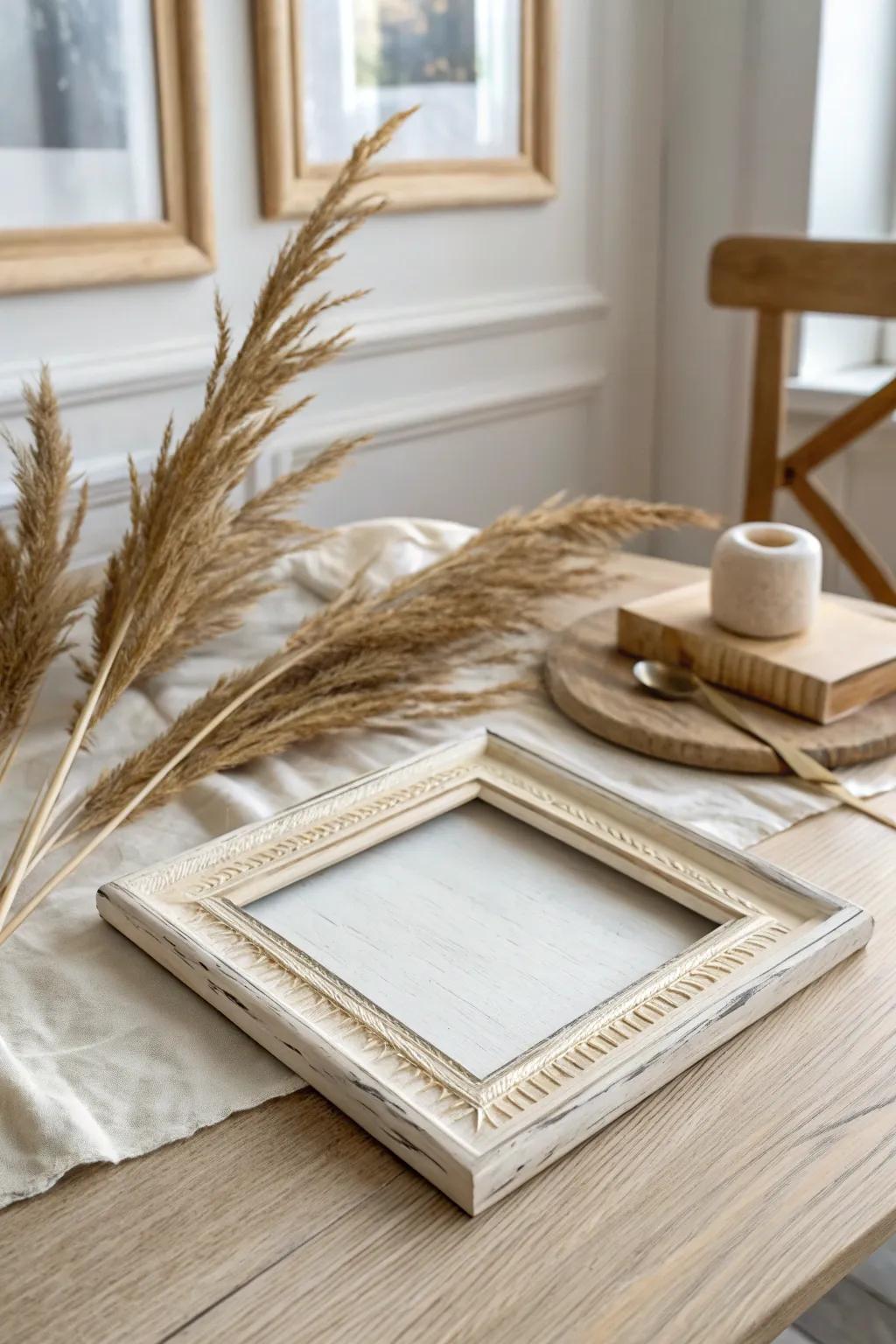
One of my “secret” tricks is marking the dining zone with a painted ceiling rectangle or shallow trim, so the dining area feels intentionally framed. I did this in a tiny apartment and it separated the living room and dining room without taking up a single inch of floor space.
You might give these a try:
- Peel and Stick Ceiling Trim: Create an elegant faux-coffered look or simple borders overhead to visually distinguish your dining space easily.
- Chalk Style Furniture Paint: Paint a defined rectangular zone above your table in a soft, matte hue to anchor the room.
- Decorative Box Beam: Install a lightweight faux wood beam to add rustic texture and clearly separate your open concept living areas.
Hang Suspended Shelves
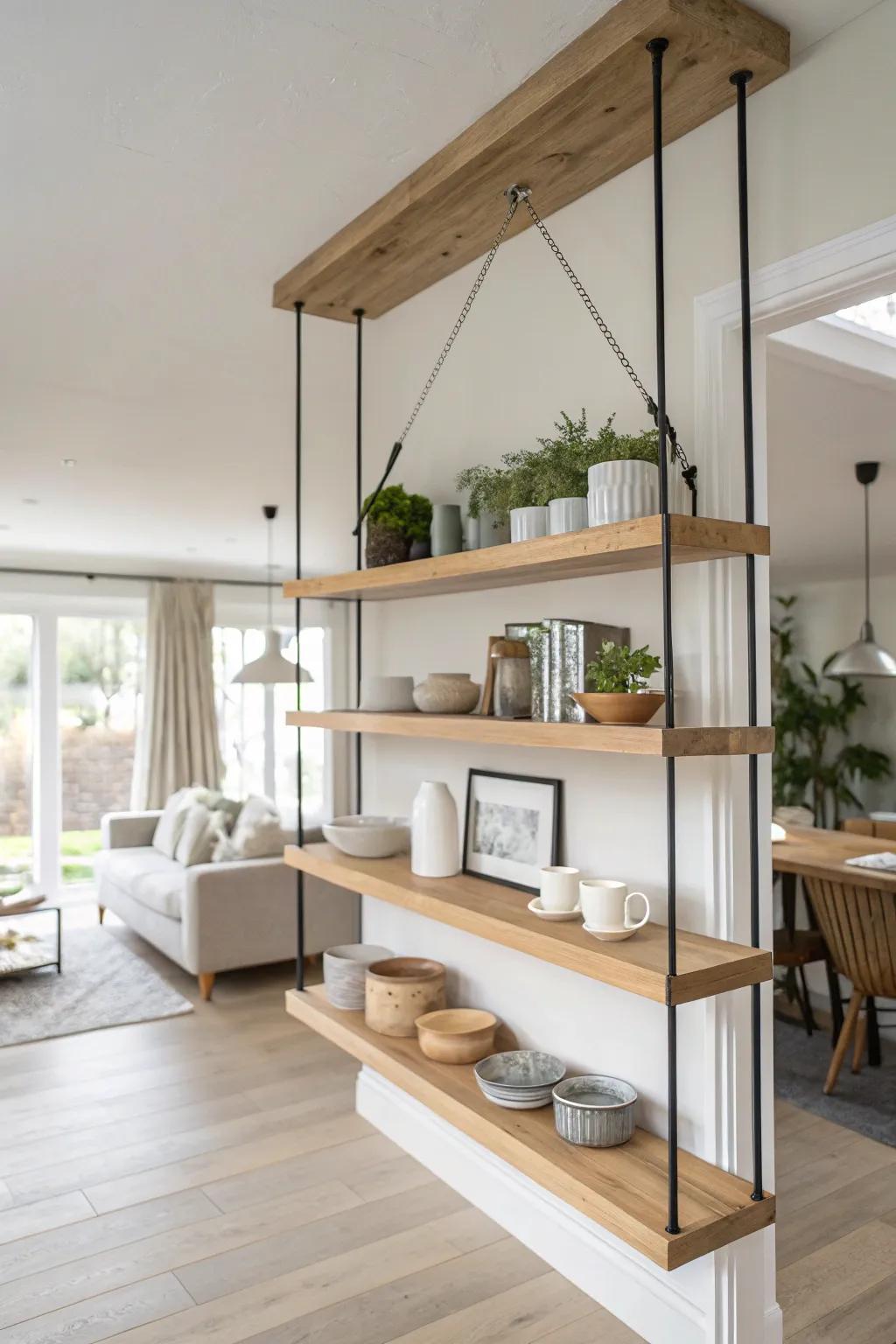
Suspended ceiling shelves make a dramatic divider between living and dining while still feeling light, like a floating boundary. I tried a simplified version with a sturdy top rail and open display, and it gave me see-through separation that guests always notice.
A few helpful options:
- Ceiling Mounted Shelf Brackets: Create your dramatic divider by securing your shelves with sturdy, industrial-style mounts that anchor safely overhead.
- Solid Wood Floating Shelves: Choose thick, natural wood planks to add warmth and display space while maintaining that open, airy feeling.
- Decorative Hanging Chains: Add an extra layer of visual stability and industrial flair with black metal chains to support your structure.
Roll in a Pegboard Partition
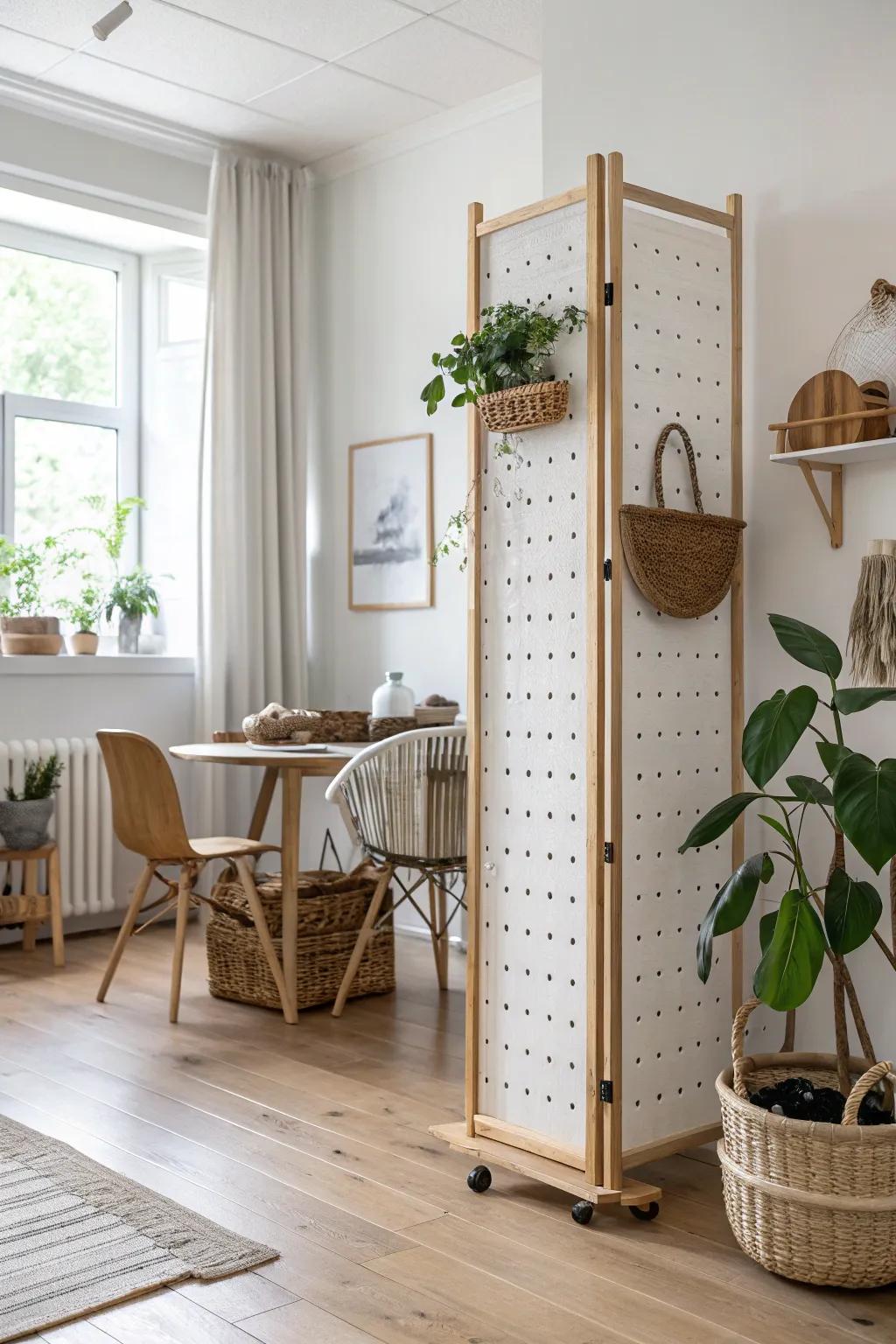
A rolling pegboard divider is such a fun, practical way to separate living and dining, especially if your layout changes a lot. I used one in my own space to hang baskets and a couple of plants, and it doubled as vertical storage right where I needed it.
A few choices to try:
- Freestanding Pegboard Room Divider: Create instant privacy and flexible storage by rolling this versatile partition exactly where you need it most.
- Woven Hanging Planter Baskets: Add greenery and texture to your divider by hanging your favorite small plants in these charming baskets.
- Pegboard Hooks and Accessories Kit: Maximize your vertical storage potential with sturdy hooks designed to hold bags, decor, and daily essentials securely.
Bounce Light With a Mirror Screen
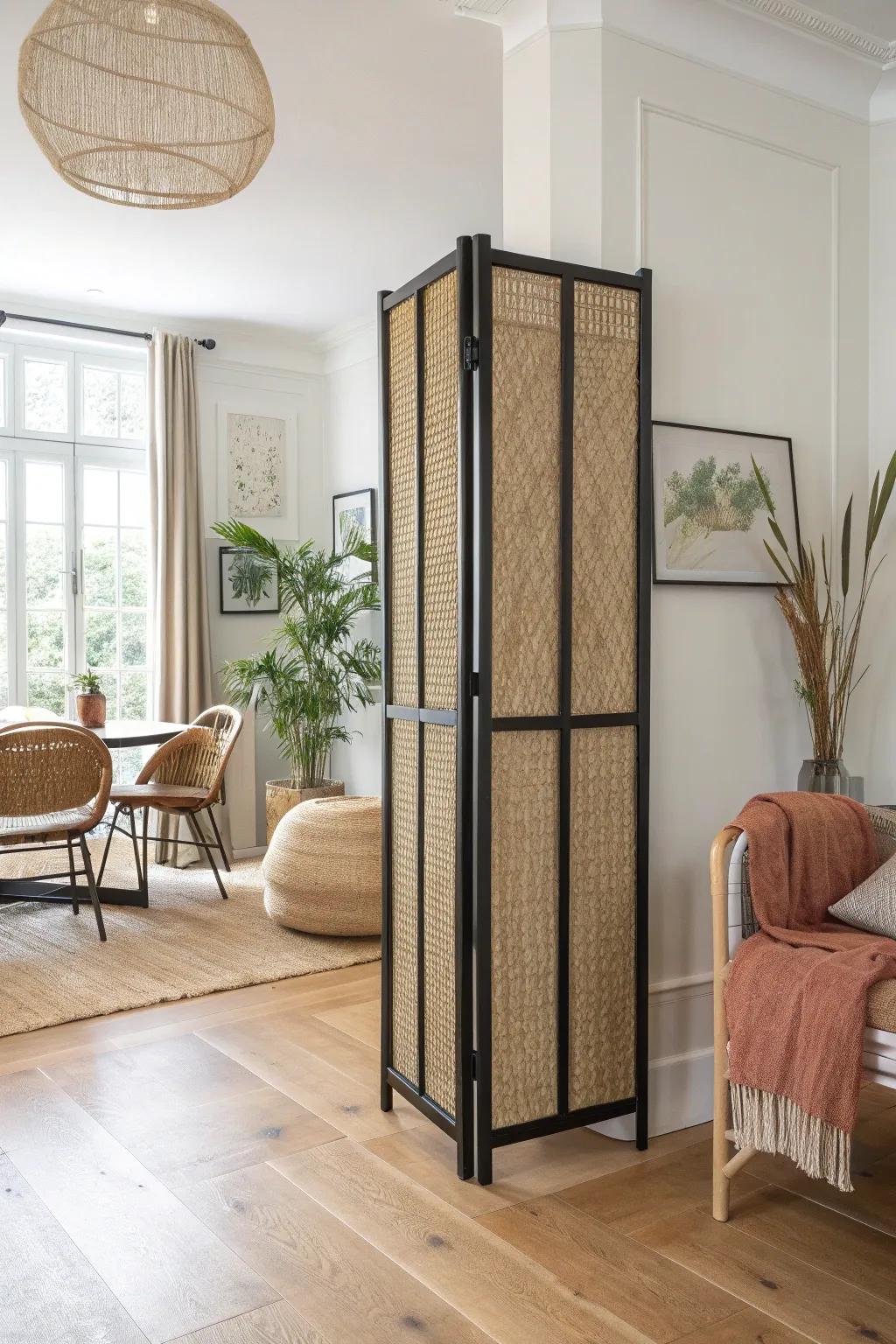
For a small-space wow moment, I’ve used a mirrored folding screen to separate living and dining while making everything feel bigger. It gives you a clear room divider effect, but the reflected light keeps the whole open plan feeling bright.
Possibly helpful picks:
- Natural Rattan Folding Divider: Instantly separate your living and dining areas with a natural texture that still allows light to filter through.
- Large Round Jute Pouf: Add flexible seating or a footrest that complements the natural, boho aesthetic of your new room divider.
- Woven Pendant Light Fixture: Tie the room together by matching your divider’s texture with an airy, woven pendant light overhead.
Try a Rotating Art Panel Divider
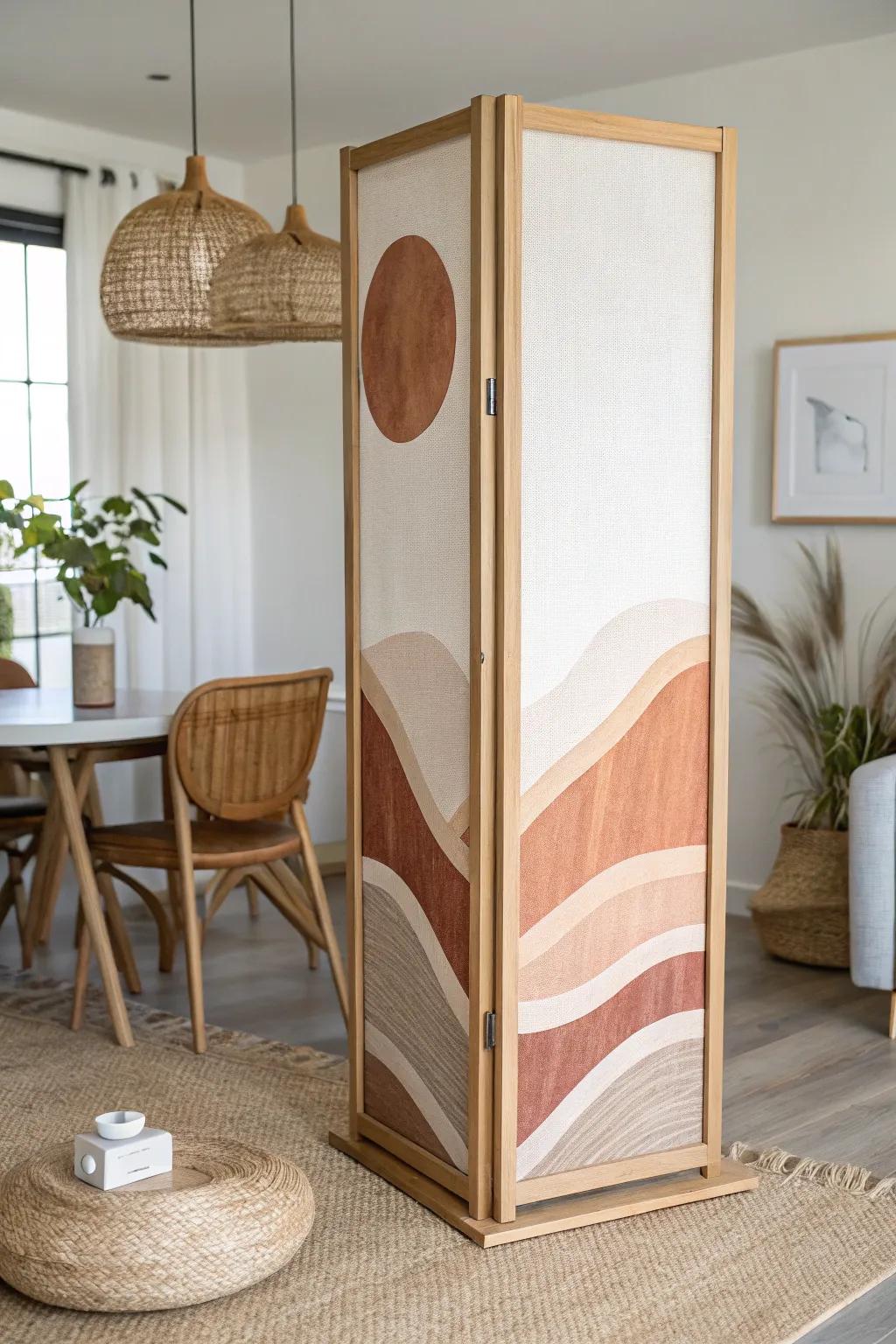
One of the coolest living-dining separation ideas I’ve tested is a tall, pivoting art panel that can rotate—art facing the living room, a calmer neutral side facing the dining area. It’s a true conversation piece, and it creates a flexible visual barrier without building anything permanent.
Might be a good match:
- Tall Narrow Wood Room Divider: Establish a distinct boundary in your open space with this self-standing, portable divider for immediate visual separation.
- Canvas or Fabric Art Screen: Add an artistic touch to your room separation by choosing large canvas screens featuring abstract or boho designs.
- Boho Woven Pendant Light: Mimic the warm, natural texture shown in the image to anchor your dining area and complement the divider.