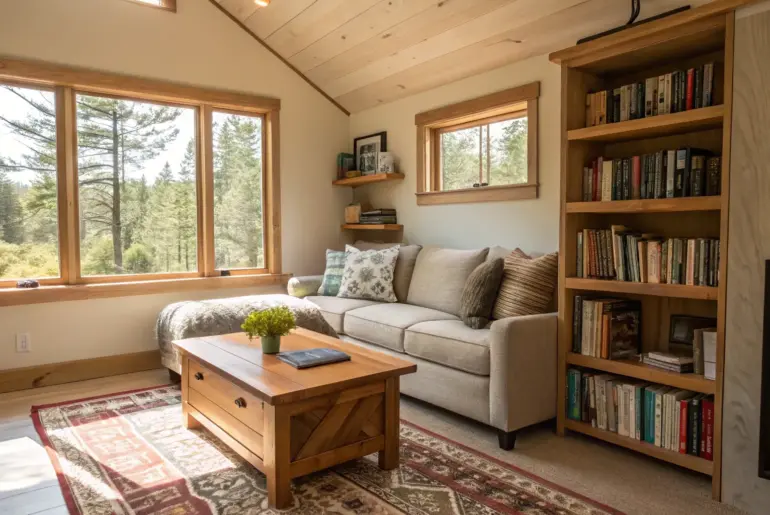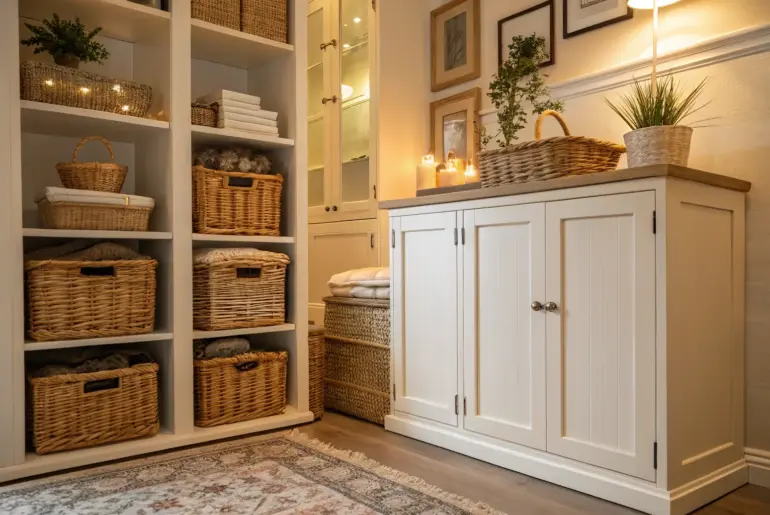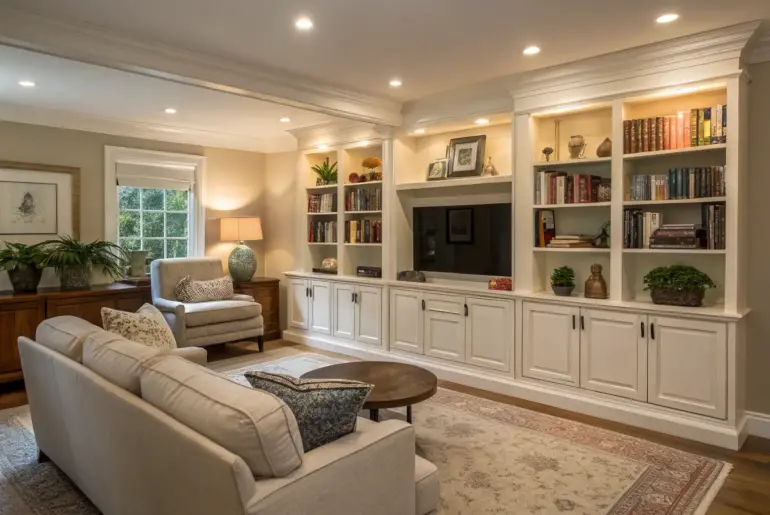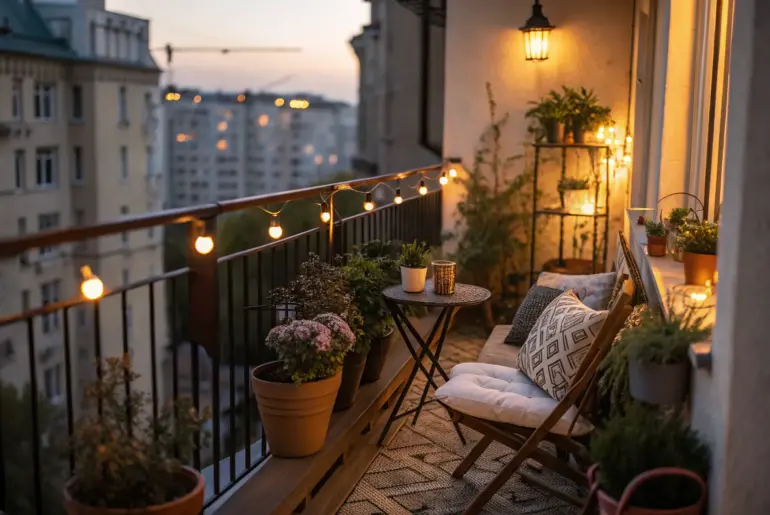
Every home—no matter the size—holds its own weather. When we begin to observe how light moves, air circulates, and shade settles through the day, we start seeing our spaces less as static interiors and more as living systems that respond to the elements.
Reading the Room: Understanding Micro Climates Indoors

Interiors don’t have just one climate. Subtle variations in light, temperature, and humidity create small “zones” that influence both comfort and aesthetics. These micro climates develop naturally through architecture, orientation, and materials.
The key factors at play:
- Sun orientation – South- and west-facing rooms collect afternoon heat and vivid light, while north-facing spaces remain even and cool.
- Air movement – Drafts, ceiling height, ventilation systems, and open doors all shape airflow.
- Material reactions – Natural fibers breathe and regulate moisture; synthetics trap warmth.
- Usage patterns – Cooking, showering, and electronics create local heat pockets.
- Moisture and humidity – Plants, aquariums, and bathrooms subtly raise humidity levels and affect texture longevity.
I’ve noticed that small apartments—especially those with large windows—can shift mood dramatically by hour. Morning light skims across surfaces, sharpening outlines; by afternoon, those same rooms mellow into warmth and softness. Recognizing these transitions is the first step in designing with, not against, your interior climate.
Harnessing Sunlight: Warmth, Mood, and Visual Depth

Sunlight is design’s most honest collaborator. It illuminates texture, dictates temperature, and anchors our emotional connection to space. Instead of covering or countering it, consider shaping it to serve your rhythm.
Observe before you design
Spend two or three days simply watching your space. At 9 a.m., where does the first light fall? At noon? By 4 p.m.? Make mental (or physical) notes—this daylight map becomes your lighting blueprint for furniture placement and color choice.
Practical strategies for managing natural light
- Soften exposure. Choose sheer linen curtains, translucent blinds, or wooden screens to diffuse sun without losing brightness.
- Reflect thoughtfully. Use pale flooring or mirrored décor to bounce light into deeper corners—but avoid too much gloss, which creates visual fatigue.
- Layer densities. Combine transparent and heavier textiles to adjust light intensity seasonally.
- Anchor the warmth. Earthy finishes—oak, clay, woven grass—ground bright spaces, preventing glare.
How materials behave in different exposures
| Material | Response to Sunlight | Ideal Placement |
|---|---|---|
| Linen & cotton | Fade gracefully, stay cool | Bright, airy rooms |
| Velvet & suede | Sun-sensitive, deepen shade tones | Interior corners or alcoves |
| Polished metal | Reflects and amplifies warmth | Accent use only |
| Natural stone | Absorbs and radiates heat slowly | Floors or window-adjacent walls |
| Bamboo & rattan | Stay stable with filtered light | Transitional bright zones |
Tip: When selecting wall colors, test swatches on at least two opposite walls. A tone that seems faintly cool in morning light might glow golden by evening.
Air in Motion: The Invisible Designer

Airflow is often overlooked, yet it defines how comfortable and balanced a room feels. Good air circulation also extends the life of furniture and textiles by regulating moisture and temperature.
How to read airflow
You can visualize it easily: light an incense stick and trace the movement of smoke. It will reveal ventilation paths and stagnant corners—your room’s “wind map.”
Ways to improve natural circulation
- Promote cross-breeze. Open windows or vents at opposite ends of a room. Even a small gap in a door frame can sustain circulation.
- Elevate airflow. Ceiling fans angled upward push warm air down in winter and upward in summer.
- Consider vertical balance. Tall bookshelves or hanging plants guide air movement upward, while rugs and fabric poufs absorb low-level drafts.
- Use breathable textures. Open-weave furniture, cane panels, and sheer textiles let a space “breathe.”
Well-ventilated rooms feel lighter and cleaner. Dust settles less, fabrics hold freshness longer, and natural scents—wood polish, herbs, linen—linger rather than stagnate.
The Comfort of Shade

Shade is not absence—it’s soft presence. In interior design, shade offers reprieve, calm, and tactile richness. It’s where the eye rests and materials reveal their quieter tones.
Designing with shade zones
- Deepen rather than brighten. Focus on layered neutrals: taupe, charcoal, umber. Contrasts between light and shadow add elegance and visual weight.
- Textural warmth. Use tactile finishes like wool, jute, and unfinished ceramics that absorb rather than reflect light.
- Ambient assistance. Add directional wall sconces, shaded pendants, or task lamps to build gentle illumination gradients.
- Plant partnerships. Introduce foliage that thrives in indirect light—ZZ plants, pothos, ferns—to give shaded corners life without fighting their nature.
Stylist’s note: I often reserve shaded areas for quiet activities—reading, writing, reflection. Their calmness becomes functional comfort.
Thermal Harmony: Balancing Temperature Through Materials

Temperature doesn’t just belong to the thermostat—it lives in the tactile qualities of surfaces. Warmth and coolness can be designed, layered, and adjusted across the seasons.
Layering for comfort
- Winter: Use dense fibers like wool, velvet, and felt for textile surfaces. Add thick curtains to insulate windows and trap warmth.
- Summer: Shift to lighter materials such as cotton gauze, hemp, or bamboo. Soften heat-absorbing leather with loose linen slipcovers.
- All-year flexibility: Juggle removable covers, reversible cushions, and neutral base hues so the space transitions with ease.
Materials as thermal conductors
| Surface | Thermal Behavior | Ideal Use |
|---|---|---|
| Clay, terracotta | Absorb warmth, slowly release it | Kitchen and floor accents |
| Marble, tile | Stay cool, resist heat | Bathrooms or sunny kitchens |
| Wool & felt | Retain heat, provide insulation | Cold corners or shaded living zones |
| Cork | Moderate insulator, softens acoustics | Walls or flooring in small apartments |
Seasonal Adjustments: Working with Time and Light
A home’s micro climate evolves naturally across seasons. Instead of redesigning entirely, adapt in layers—just as nature does.
Spring–Summer:
- Replace heavy drapes with gauzy curtains to encourage airflow.
- Use breathable bedding and light area rugs.
- Introduce soft greens and cool neutrals for visual freshness.
Fall–Winter:
- Add warmth through textured throws and warm metallic accents.
- Rearrange seating toward windows to capture sunlight.
- Consider the scent climate—candlelight, cedar blocks, or dry herbs can subtly alter the feeling of temperature.
Bringing It All Together
Designing from micro space to micro climate means treating interior design not as static styling, but as part of an ecosystem. Wind, sun, and shade are your quiet collaborators. They interact with how we move, rest, and experience home.
Once you start seeing your rooms as living atmospheres—with light as material, air as rhythm, and shadow as form—you begin designing with intuition rather than correction.
Your décor no longer resists nature; it participates in it. And that’s where true comfort begins.