A good tiny house floor plan is basically a promise that your day-to-day life will feel easy, not cramped. I’ve learned in my own small-space years that the best layouts don’t just look cute on paper—they choreograph every step from coffee to laundry to bedtime.
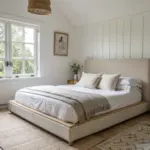
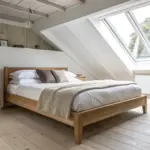
Main-Floor Bedroom Plan

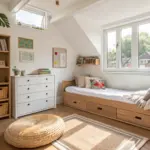
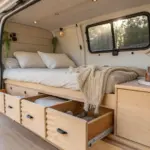
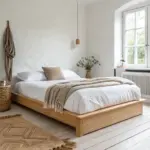
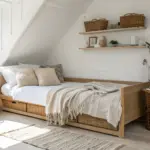
A tiny house floor plan with a main-floor bedroom (even a snug one) is pure sanity if you don’t want ladders in your life. I’ve helped clients switch from a loft to a ground-level sleep zone, and their daily routines instantly got calmer.
Products that could assist:
- Space-Saving Murphy Bed Kit: Maximize your ground-floor layout by hiding your bed away during the day to create flexible living space.
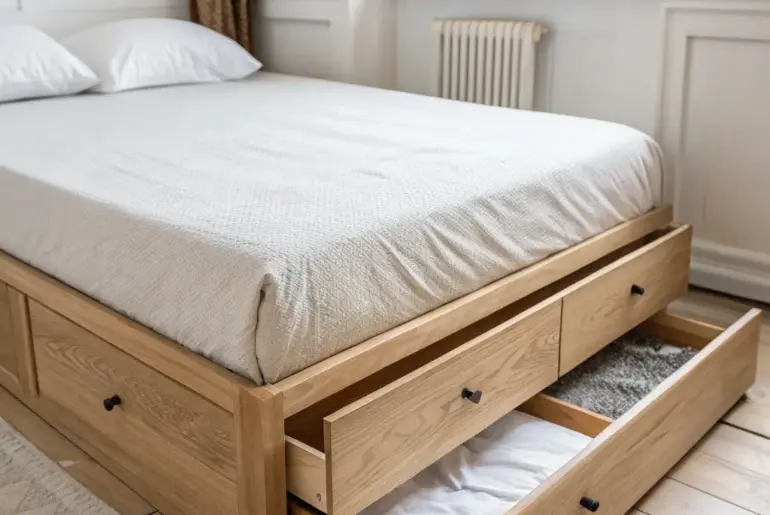
- Compact Under-Bed Storage Drawers: Utilize every inch of your main-floor bedroom with streamlined organizers that slide easily under low bed frames.
- Graph Paper Sketch Pad: Draft your own custom floor plan sketches and visualize layout changes before committing to a final build.
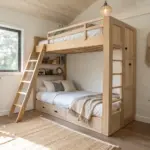
Two-Loft Sleeping Plan

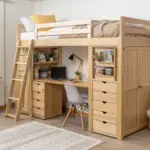
A tiny house floor plan with dual lofts is my favorite way to fit two sleeping zones without carving up the main level. I’ve seen it work beautifully for guests or kids, and it keeps the center space open for everyday living.
May just do the trick:
- DIY Wooden Miniature House Kit with Loft: Build your own tiny dream home model to visualize space and design before committing to full-scale construction.
- Compact Loft Ladder or Step Stool: Maximize your vertical space safely with sturdy, space-saving ladders designed specifically for tight tiny house interiors.
- Tiny House Floor Plan & Design Book: Explore various dual-loft layouts and creative storage solutions to optimize every inch of your future small home.
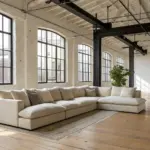
Single-Level Accessibility Plan

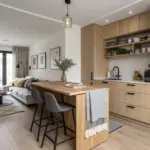
A single-story tiny house floor plan (no loft at all) feels surprisingly roomy when you keep sightlines clear. I’ve lived without upper-level sleeping before, and not having stairs instantly made the home feel more relaxed and functional.
Consider these options:
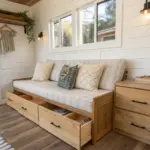
- Convertible Sofa Bed with Storage: Maximize your single-level layout by choosing furniture that transforms for sleeping and offers hidden storage compartments.
- Wall-Mounted Drop-Leaf Table: Keep sightlines clear and open up floor space by installing a dining table that folds away easily.
- Architectural Scale Model Kit: Visualize your accessible floor plan before building by assembling a realistic wooden model kit of a tiny home.
Bathroom as a Back-Corner Block

In tiny house floor plans, I like the bath as a tight back-corner core so plumbing stays efficient and the main space stays open. In my own layouts, pushing “utility stuff” to one corner made the whole place feel more intentional.
Possibly handy products:
- Compact Vessel Sink Faucet: Choose a sleek, gold-finish faucet to add elegance to your compact bathroom without occupying vital counter space.
- Space-Saving Vanity Unit: Maximize your tight corner with a small footprint vanity that offers hidden storage for daily essentials.
- Round Wall Mirror: Create the illusion of more space and reflect light by hanging a simple, round framed mirror.