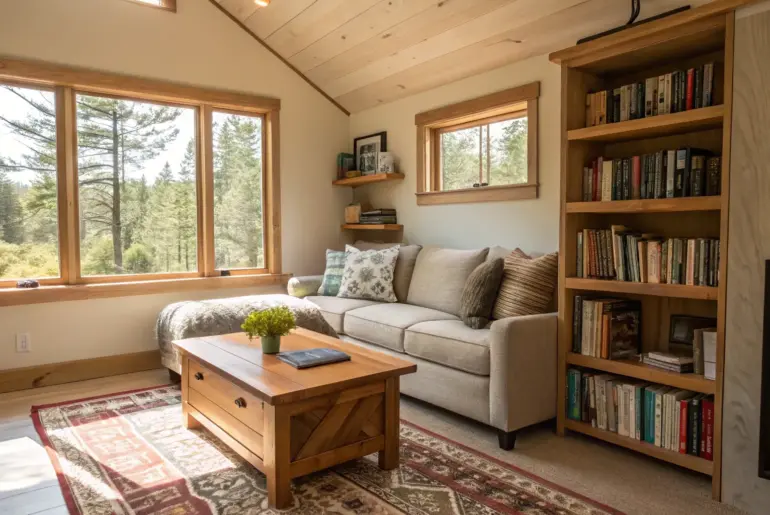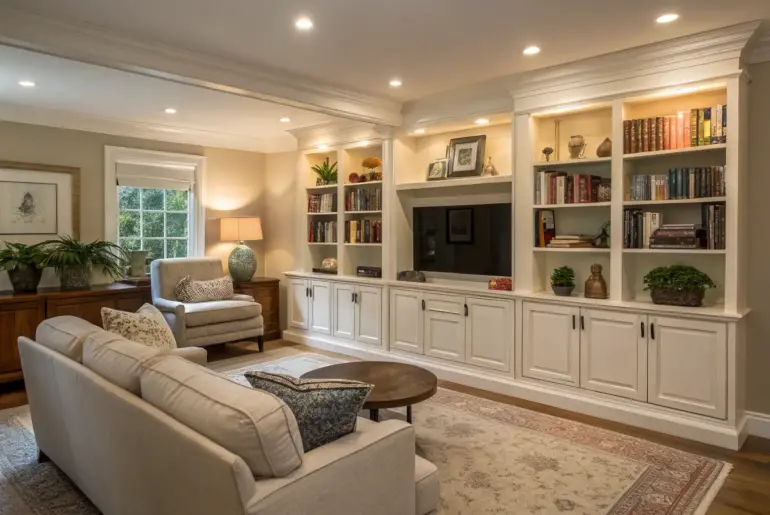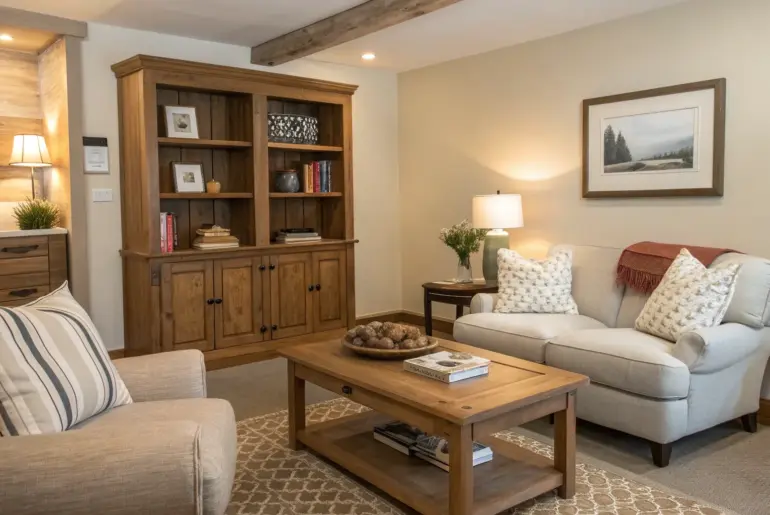
Storage is more than practicality—it defines the rhythm of a home. The balance between openness and concealment decides whether a space feels alive or serene, expressive or composed.
The Psychology of Containment

Our eyes crave order but resist sterility. Every visible object contributes to a mental workload—a subtle awareness of what’s “out.” Open containers stimulate, inviting participation; closed ones soothe, enclosing the visual field. Recognizing how both affect energy is a cornerstone of intentional home design.
From an interior stylist’s view, clutter isn’t only about quantity—it’s about exposure. Sometimes, an overfilled basket feels friendlier than a row of empty cabinets. What matters is emotional rhythm: moments where the eye engages, and moments where it rests.
Open Storage: Accessibility with Style

Open baskets and trays turn everyday items into curated displays. They present texture, encourage use, and remind us that perfection isn’t the goal—function is. The charm of open storage lies in its humanity; it keeps a space adaptable and visibly lived-in.
Where to use open storage
– Living areas: Rolled throws in a woven basket soften the sofa area.
– Entryways: A wire bin for scarves or reusable bags makes mornings smoother.
– Bathrooms: Rolled towels in tall seagrass baskets add spa-like ease.
– Kitchens: Wooden trays or bowls for produce prevent visual clutter on countertops.
Materials that work well:
- Wicker, seagrass, or rattan—add warmth and texture.
- Metal or powder-coated wire—suit modern or industrial interiors.
- Soft textiles like felt or linen—gentle on delicate items such as scarves or knitwear.
Practical styling tips:
- Limit visibility. Group similar items—neutral tones photograph and age better.
- Layer textures. Combine a smooth ceramic surface near fibrous baskets for tactile balance.
- Use hierarchy. Large, low baskets ground a vignette; smaller trays provide accessible organization on surfaces.
| Space | Storage Type | Placement | Style Tip |
|---|---|---|---|
| Entryway | Low woven bin | Below console | Add a small plant above to create height contrast |
| Laundry area | Open metal crate | Next to washer | Label with simple text for quick sorting |
| Kids’ play corner | Fabric baskets | Rolling cart | Keeps clean-up casual but contained |
| Living room | Lidded basket (half-open) | Beside sofa | Stores throws while adding organic charm |
Closed Storage: The Art of Calm

Closed storage defines stillness. Drawers, cabinets, trunks, and lidded boxes impose boundaries—essential for visual and mental clarity. They’re particularly effective in compact homes, where clean lines preserve spaciousness.
Where to prioritize closed storage:
- Bedrooms: Concealed nightstand drawers or linen-covered boxes foster relaxation.
- Home offices: Uniform storage boxes streamline documents without distraction.
- Dining spaces: Sideboards or built-ins maintain dignity by hiding the daily mess.
- Children’s rooms: Lidded units keep the volume of toys out of sight, leaving only key pieces displayed.
Design considerations:
- Choose surfaces that echo your wall or floor tones; this maintains visual cohesion.
- Use subtle textures—matte lacquer or fabric-lined interiors—to soften the sensory experience.
- Leave breathing space on top of closed units; one decorative object is often enough.
| Space | Closed Storage Type | Suggested Material | Visual Effect |
|---|---|---|---|
| Bedroom | Linen-wrapped boxes | Neutral textile | Gentle and tactile |
| Living room | Low credenza | Walnut or oak veneer | Creates grounding element |
| Kitchen | Full-height cabinets | Satin finish MDF | Clean lines, reflective calm |
| Kids’ space | Painted chest | Matte pastel | Adds color coherence |
Balancing Both for Real-Life Harmony

Pure openness can feel chaotic; full concealment risks sterility. A home’s most natural rhythm lies between them—what I often call intentional layering. Think of it as composition: alternating visible texture with visual silence.
How to create balance:
1. Map your surfaces. Identify open shelves or tabletop zones and match each with a concealed counterpart.
2. Follow the two-thirds rule. Around 60–70% closed storage preserves tranquility, leaving 30–40% open for personality.
3. Switch seasonally. Let summer air out woven textures; in winter, store them for smoother surfaces.
4. Play with light. Reflective materials (glass, lacquer) offset rougher woven pieces, keeping balance between warmth and polish.
Case perspective:
In a small Brooklyn apartment I restyled last year, we used stacked wooden boxes under a mid-century bench (closed) and a round open basket beside it (open). The combination visually extended the seating area, grounded the texture balance, and hid seasonal clutter without sterilizing the look. This kind of dual system makes maintenance almost intuitive.
Materials, Mood, and Message

Every storage choice affects atmosphere. Natural fibers breathe and move; metals reflect precision; lacquered finishes emphasize control. The tactile selection of materials helps define the emotional temperature of a room.
| Material | Ideal Use | Mood Communicated |
|---|---|---|
| Rattan/Seagrass | Living areas, soft zones | Warmth and approachability |
| Metal/Wire | Utility, modern kitchens | Structure and efficiency |
| Painted Wood | Built-ins, furniture | Timeless calm |
| Linen/Felt | Bedrooms, wardrobes | Comfort and softness |
| Glass or Frosted Acrylic | Transitional areas | Lightness and subtle visibility |
A tip I often give: if a space feels noisy, replace one open basket with a lidded alternative. If it feels static, add texture in plain sight—folded towels, woven containers, or a visible stack of books. The visual interaction changes everything.
Rethinking Storage as Design
Storage isn’t an afterthought—it’s architecture for everyday life. The movement between access and retreat is what keeps a home breathing. In scientific terms, our brains process visual order similarly to rhythm in music; alternating structure and openness creates a sense of harmony that supports focus and rest alike.
When I enter a balanced space—one that has both life on display and life tucked away—I notice how quietly it functions. Open baskets whisper of daily moments; closed boxes hold the past still. Together, they make living rooms that live beautifully.