When homes feel cluttered or chaotic, most people dream of “just one more room.” But space alone rarely solves disorganization. The true magic lies in how systems—the habits, layouts, and storage logic behind every object—work together.
Rethinking “More Room” Thinking

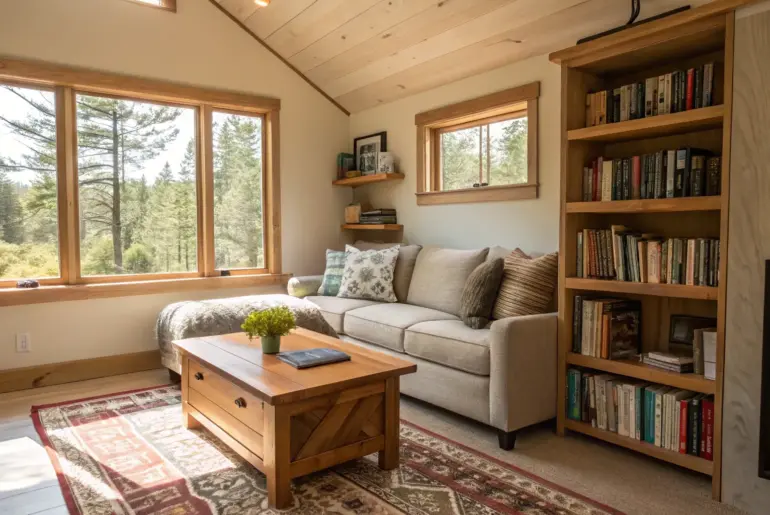
It’s tempting to think that a larger kitchen, closet, or living room will automatically make life easier. In reality, disorganization simply expands with more square footage unless you have strong systems guiding how things flow. I’ve seen compact apartments feel serene because their owners designed every drawer with purpose, while spacious homes felt perpetually cluttered due to poor structure.
Good systems do three things:
- Channel energy efficiently (you always know where things live).
- Reduce visual noise (your home “breathes”).
- Support behavior change (tidying becomes effortless).
Understanding Organizational Systems

An organizational system isn’t just a storage solution—it’s a framework for decision-making. Think of it as architecture within architecture. Every shelf height, zone boundary, and furniture proportion determines how well your home works for you.
| Function | System Examples | Visible Result |
|---|---|---|
| Entryway order | Key tray, wall hooks, mail files | No morning search stress |
| Kitchen flow | “Prep-Cook-Clean” triangle | Easy meal rhythm |
| Wardrobe editing | Seasonal rotation zones | Clarity and better outfit choices |
A home designed around such repeatable logic feels intuitive. Items return to their place because the system tells you where that place is.
Start With Function, Not Furniture
When people begin a redesign, they often start shopping: baskets, bins, or modular shelves. But that’s decoration without direction. Begin by sketching functions first. Ask:
- Which activities happen here daily?
- What interrupts the flow most often?
- Which objects never seem to belong anywhere?
Once you define these patterns, function-guided systems emerge naturally. For example, a narrow hallway can double as a transition zone if you install vertical wall storage and include a small bench for shoes and bags. No expansion required—just a clearer logic.
The Power of Zoning

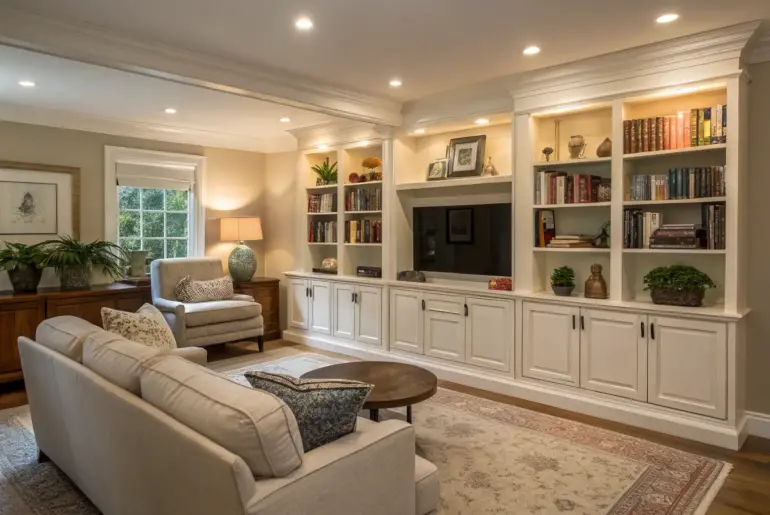
Zones are invisible rooms within rooms. They create order where walls can’t. In open-plan living, zoning lines might be drawn with rugs, modular shelving, or light temperature changes.
- Command zones anchor activity—like a baking station or home office.
- Buffer zones prevent chaos—like a landing tray by the front door for transient items.
- Quiet zones reduce stress—like a clutter-free bedside area that signals calm.
Once you master zoning, every inch feels intentional.
Storage As Storytelling

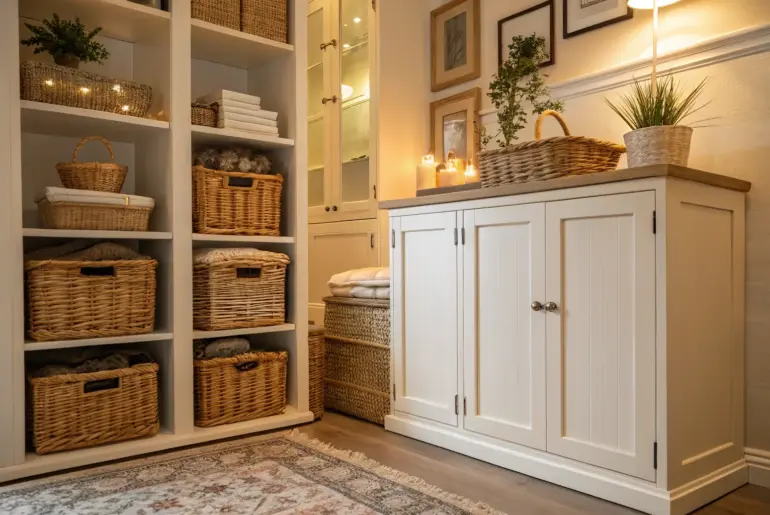
Storage should tell the story of how you actually live—not how you wish to. I often advise people to store items by frequency and function, not category alone.
- Level 1: Daily-use items (reachable without bending).
- Level 2: Weekly or seasonal items (upper shelves, labeled boxes).
- Level 3: Archive or sentimental pieces (attic or labeled bins).
This hierarchy turns your home into a living inventory system. You start making decisions based on utility, not emotion.
Design Principles Behind Functional Systems
Scientific research on spatial cognition shows humans are highly responsive to patterns and visual boundaries. When visual fields appear clean and predictable, cortisol drops and task efficiency increases. In short, well-organized environments support mental clarity.
Designers often apply Gestalt principles—like proximity and similarity—to achieve cohesion:
- Keep similar objects grouped (similarity).
- Maintain consistent spacing between categories (proximity).
- Reduce odd one-outs that break visual rhythm.
These subtle cues teach your brain how to interpret your space without conscious effort.
When Small Means Smarter
Compact homes are the best teachers of system design. Here’s a tested, three-phase method to recalibrate small spaces:
- Audit before adding: Observe one week of use. Where do items pile up?
- Assign clear homes: Every category gets a fixed, labeled space.
- Automate maintenance: Keep one “transitional basket” for items to relocate weekly.
Even in a studio, this rhythm maintains a sense of expansion because nothing competes for attention.
Quick Tip: Designing With Restraint
One of the most powerful tools in any home is emptiness. An open surface invites possibility. A system that enforces limits—one shelf per category, one decorative bowl on a console—keeps design intentional and restful.
Why Systems Outlast Square Footage
More space can mask disorganization temporarily, but good systems cultivate peace long-term. Order is scalable: once you build it, it sustains itself across any floor plan. Systems turn square feet into functional capacity. They help a small kitchen cook like a grand one and make a single closet feel infinite.
Because in the end, a well-organized home isn’t about fitting life inside walls. It’s about teaching the walls to fit your life.