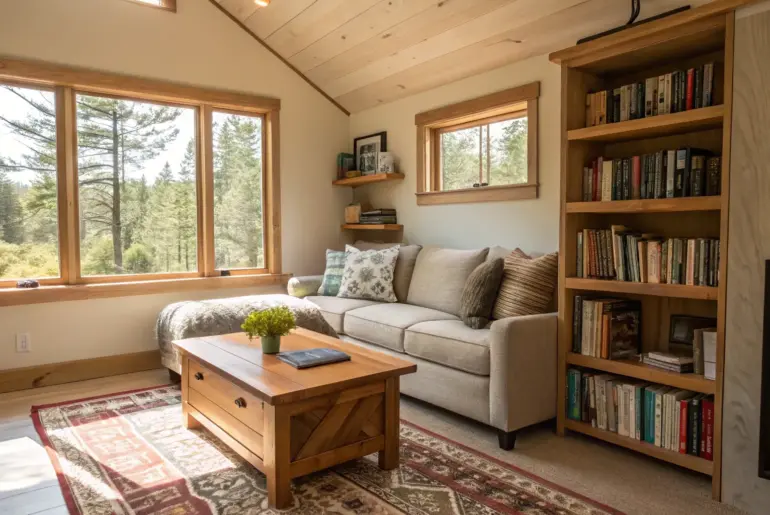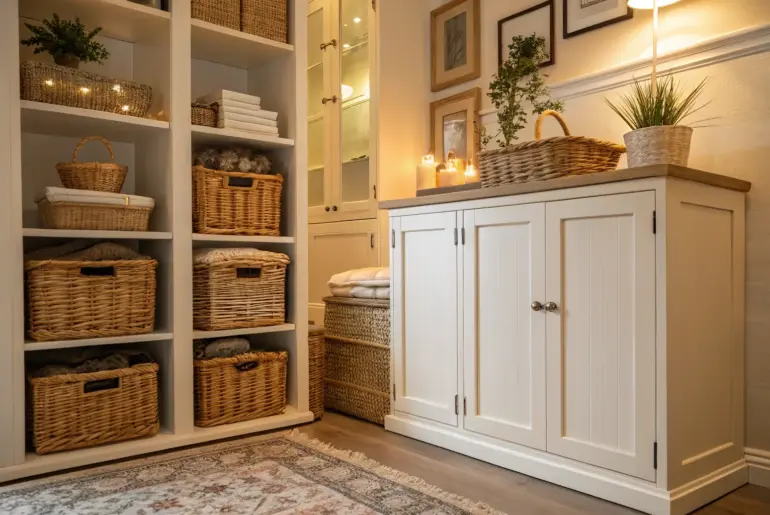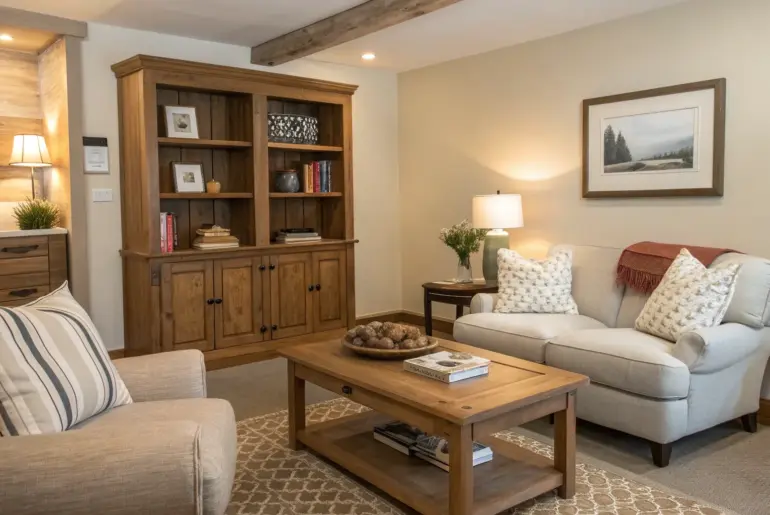
Every serene interior hides an invisible structure beneath its calm appearance. Quiet rooms are not empty — they are intelligently organized. Planning storage like an architect means designing the hidden systems that let simplicity and comfort coexist.
The Architecture of Calm
Architects never design façades first — they start with structure. The same is true for interiors. When calmness feels effortless, it’s because the home’s storage systems have been built on a foundation of logic and flow.
Good storage design begins by reading a space as an architect would:
- Analyze the structure. Where do walls, beams, windows, and doors dictate possible storage lines?
- Observe function and movement. How do paths of use — cooking, dressing, reading — unfold through the day?
- Identify pressure points. What areas absorb the most activity, and which corners remain quiet?
Once you see your home in these functional layers, the chaos starts to form a pattern. Design follows behavior — not the other way around.
The Layered System

Invisible order depends on systems — layers that range from deeply structural to freely movable. An easy way to think about it is as three nested layers, each with its own role.
| Layer | Description | Purpose | Typical Examples |
|---|---|---|---|
| Base layer | Built-in or permanent elements integrated into architecture | Stability | Closets, wall niches, under-stair cabinets |
| Mid layer | Movable furniture that shapes how a space adapts | Flexibility | Modular shelving, credenzas, kitchen carts |
| Surface layer | Everyday tools that live in sight but stay organized | Accessibility | Bowls, trays, baskets, drawer dividers |
Each layer supports the next. A built-in wall system conceals the bulk, while open shelving introduces rhythm and air. On top of that, tactile containers and trays invite daily tidiness. Together, they create calm that feels both controlled and alive.
Reading the Room: A Design Exercise
Before purchasing new storage, study your space as a system of light, flow, and use. I often do this by mapping zones on paper — drawing where movement, light, and activity intersect. You can try this with any room:
- Trace circulation routes. Mark how you naturally cross the space. Avoid placing storage along main walking paths.
- Spot light gradients. Identify bright and dim zones; open storage thrives where natural light highlights texture, while deep cabinets suit shaded walls.
- Mark visibility lines. What’s visible from doorways or the sofa should remain visually calm.
Example: A Small Apartment System
| Zone | Function | Priority Storage | Design Tip |
|---|---|---|---|
| Entry | Transition + drop zone | Closed wall cabinet, slim bench drawer | Conceal outerwear at eye level to minimize visual noise |
| Kitchen | High activity, limited space | Vertical pull-outs, integrated wall rails | Align storage heights with working ergonomics |
| Living | Shared area, visual calm | Modular open-closed shelving | Alternate solid and open fronts for rhythm |
| Bedroom | Rest & retreat | Low drawers, soft bins under bed | Keep all visual weight below the horizon line for calm |
This analytical approach helps you avoid “decorative storage” that looks nice at first but fails under everyday conditions.
Invisible Systems, Visible Ease

The goal is not to hide your belongings — it’s to make the logic behind them disappear. The more predictably things are placed, the less mental effort your home demands.
Design systems with these architectural principles:
- Consistent Order. Group by behavior, not category — for example, a “morning zone” rather than a “coffee tools” zone.
- Symmetrical Density. Keep storage mass balanced across a room; one heavy cabinet in a corner can tilt the visual weight of an entire wall.
- Rhythmic Voids. Like columns in a façade, leave equal breathing gaps between storage elements.
Tip: Empty space carries as much design power as storage volume. Architects call this negative space — the silent partner of good composition.
Material Logic: The Beauty of Unseen Touch

Invisible systems feel most natural when they’re made of tactile, quiet materials. They communicate calm not through display, but through how they behave.
- Natural matte woods like ash and oak absorb light and merge visually with painted walls.
- Powder-coated steel in soft finishes is ideal for structural frames inside cabinets.
- Textiles — felt, linen, or cotton — soften drawers, dampen noise, and add warmth to the daily ritual of putting things away.
Storage that sounds silent, moves smoothly, and feels pleasant under the hand contributes as much to a home’s serenity as any color palette.
Planning by Behavior: How to Design Storage That Works
Architectural calm is behavioral at its core. Before designing, chart your daily patterns. I like to note every touchpoint — where objects land, stack, or stall.
Try this framework:
1. Observe → Analyze → Design → Maintain.
– Observe: Spend a week noticing what ends up out of place.
– Analyze: For each item, ask if the issue is lack of space or lack of proximity.
– Design: Create systems that meet the path of use — e.g., charging drawers near outlets, baskets beside reading chairs.
– Maintain: Build rituals instead of rules — a ten-minute reset in the evening often keeps systems self-sustaining.
Case Insight: In my own studio, I once replaced a single open bookshelf with a combination of shallow drawers beneath a ledge. The visual calm improved instantly — and the space gained 30% more usable capacity. The structure didn’t grow; the logic did.
Designing for Change
True calm isn’t frozen; it evolves. Good storage anticipates change — new hobbies, shifting schedules, the rhythm of home life.
Design resiliency tips:
- Reserve roughly 20–25% of every storage zone for future flexibility.
- Opt for adjustable shelves or modular inserts rather than fixed partitions.
- Periodically audit your systems: twice a year, unload one zone entirely and reconfigure it from scratch.
By building adjustability into the bones of your space, you prevent future clutter. Architectural calm remains steady even as life transforms around it.
The Silent Partner of Beauty
A balanced home feels peaceful not because it hides life, but because its systems reflect it. The shelves, drawers, and cabinets all collaborate invisibly to sustain visible ease.
Design like an architect — not to conceal, but to guide movement and meaning. The beauty of a calm home lies in its discipline: invisible decisions that let daily life unfold without friction or noise.
When systems do their quiet work, you’re free to experience the surface — the textures, the colors, the calm — as they were meant to be: visible, effortless, and deeply human.